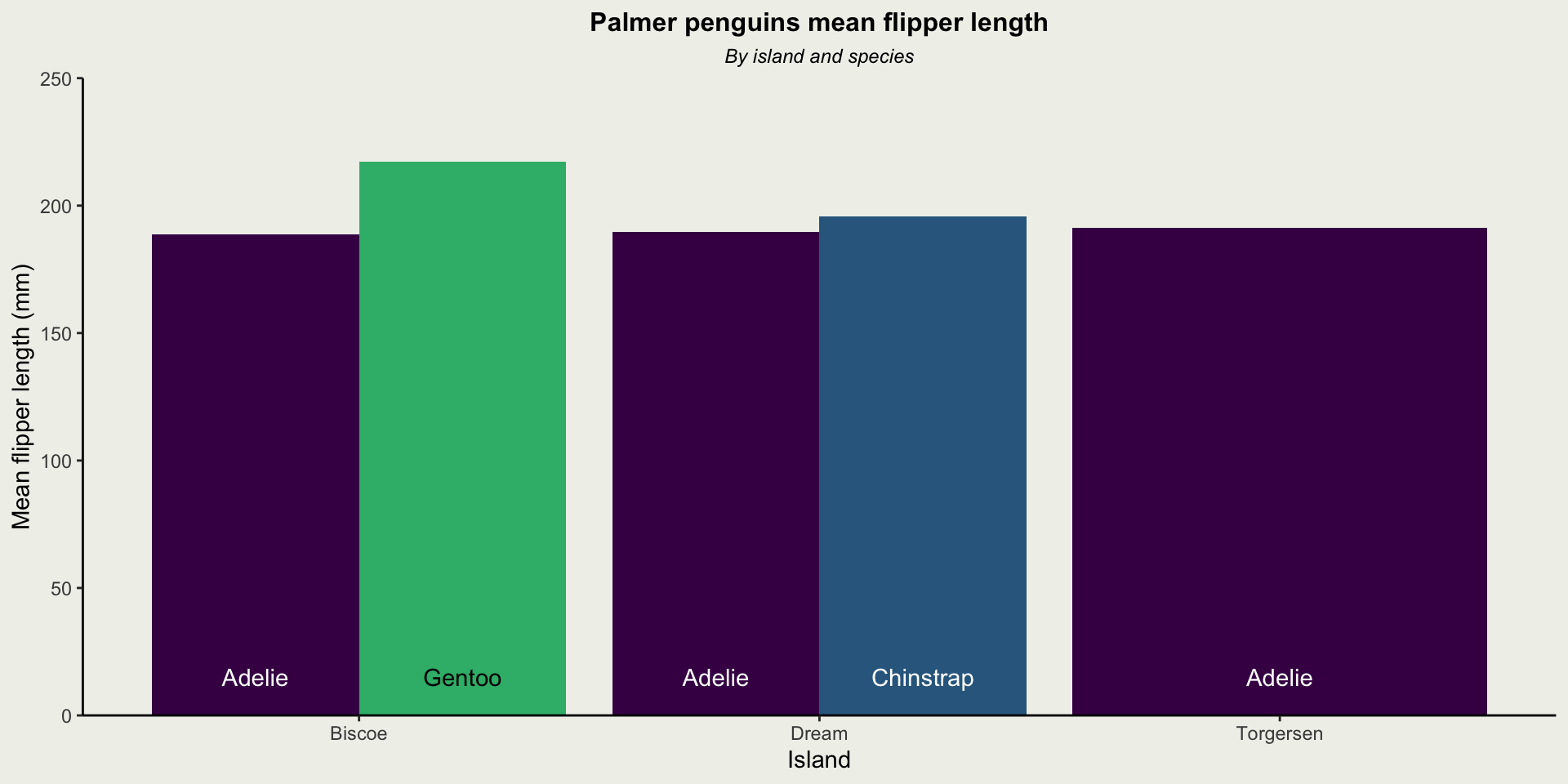
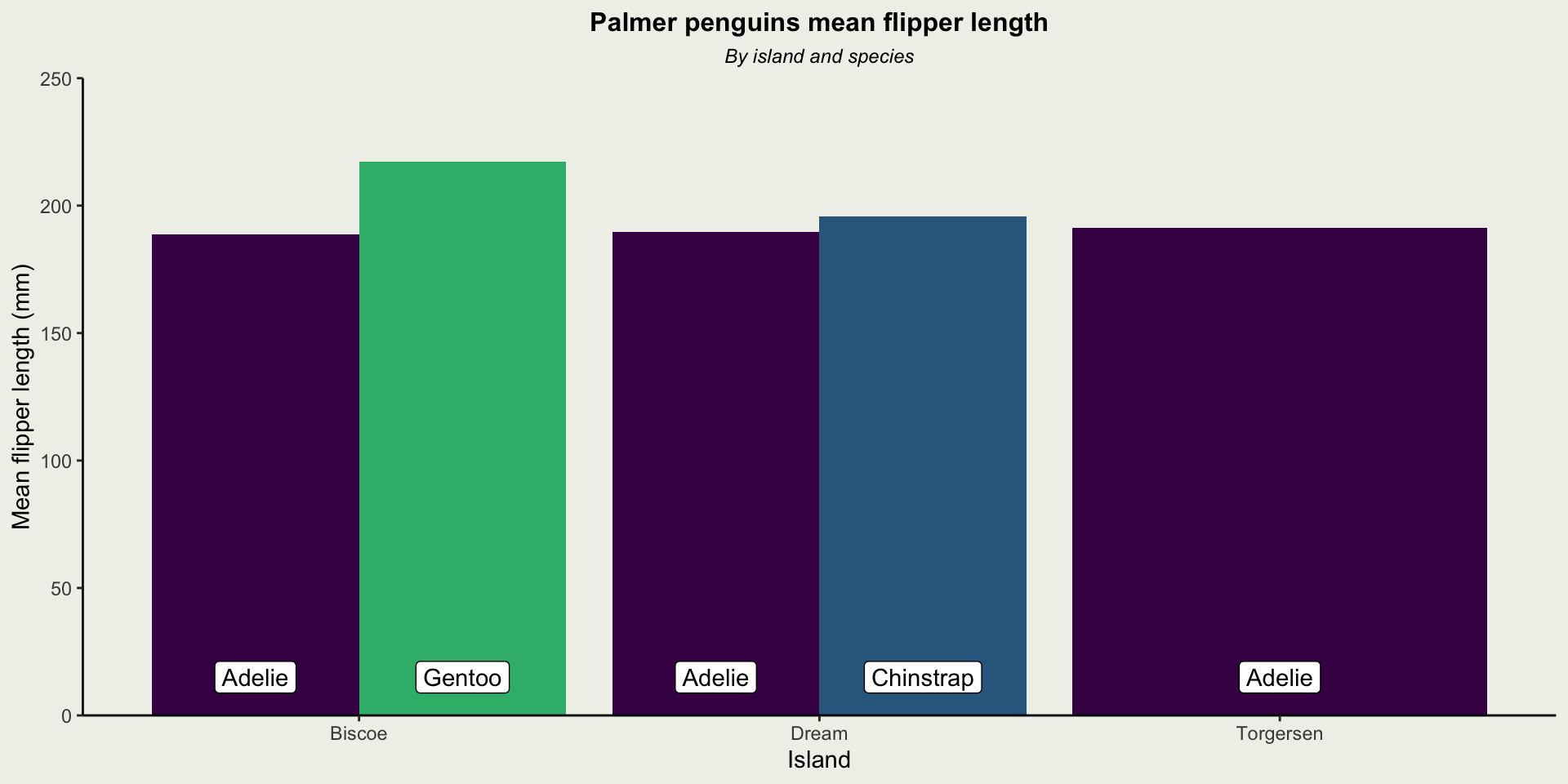
| Island | Species | Mean flipper length (mm) |
|---|---|---|
| Biscoe | Adelie | 188.8 |
| Biscoe | Gentoo | 217.2 |
| Dream | Adelie | 189.7 |
| Dream | Chinstrap | 195.8 |
| Torgersen | Adelie | 191.2 |
Allow us to swiftly convey a message
Easier to compare than numbers
Can capture your audience
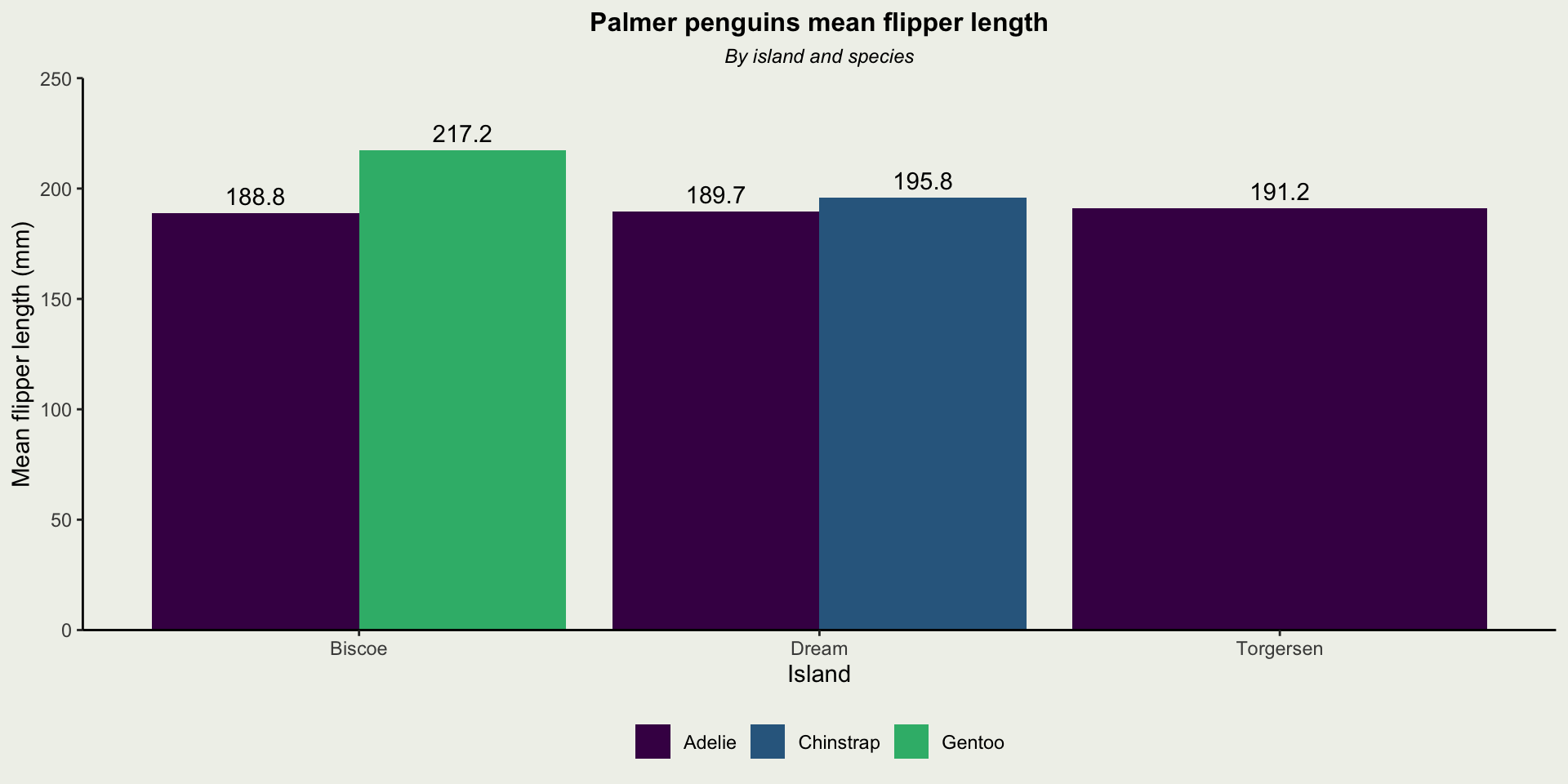
| Island | Species | Mean flipper length (mm) |
|---|---|---|
| Biscoe | Adelie | 188.8 |
| Biscoe | Gentoo | 217.2 |
| Dream | Adelie | 189.7 |
| Dream | Chinstrap | 195.8 |
| Torgersen | Adelie | 191.2 |

Many styles to choose from
Much freedom aesthetically
Not a major focus of research
Not all colours are equally distinguishable
Colourblindness can quickly make figures unreadable
More than one type of colourblindness exists
Printing in black-and-white also makes you colourblind
Colouring for Colourblindness (1/7)
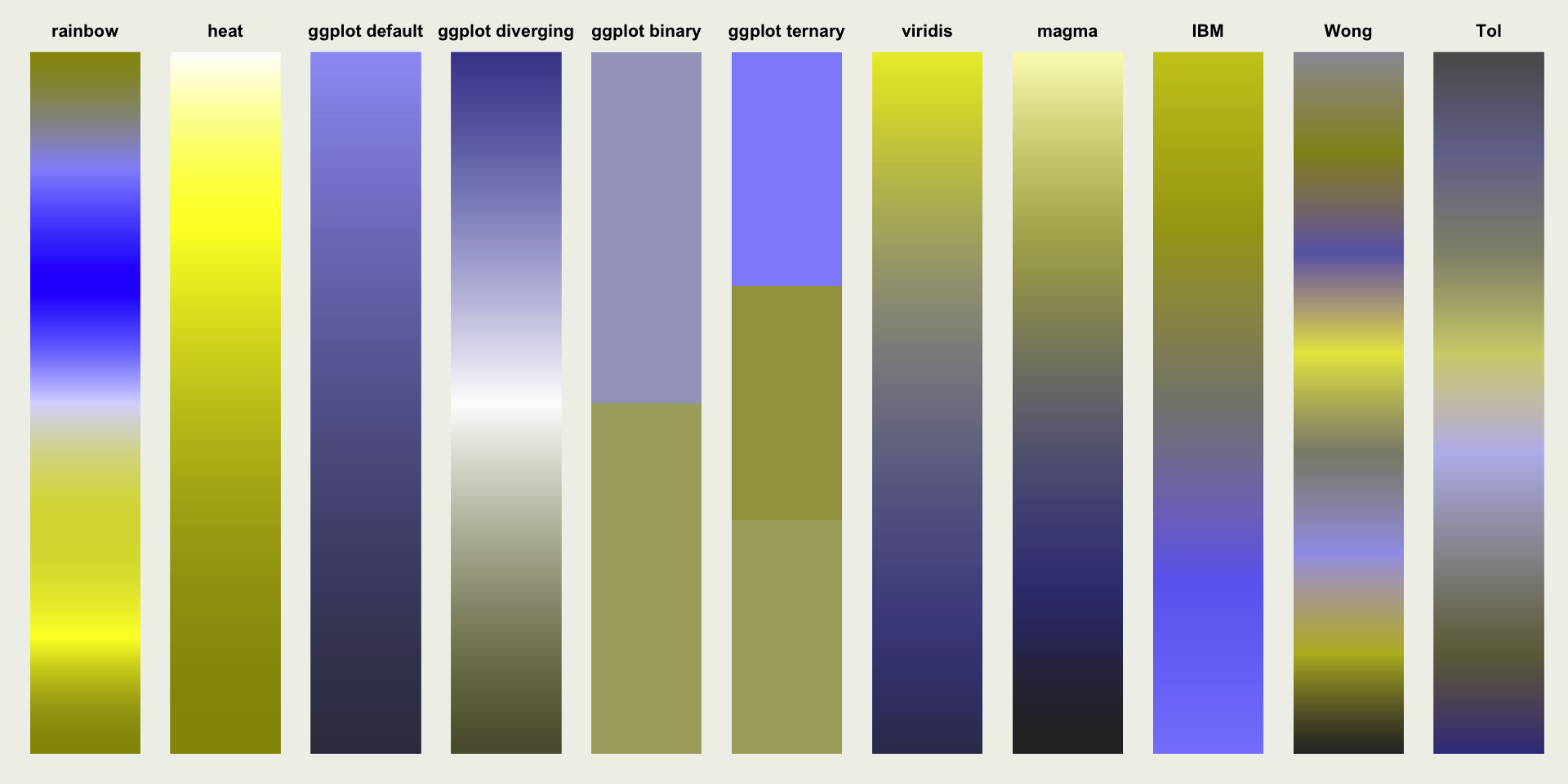
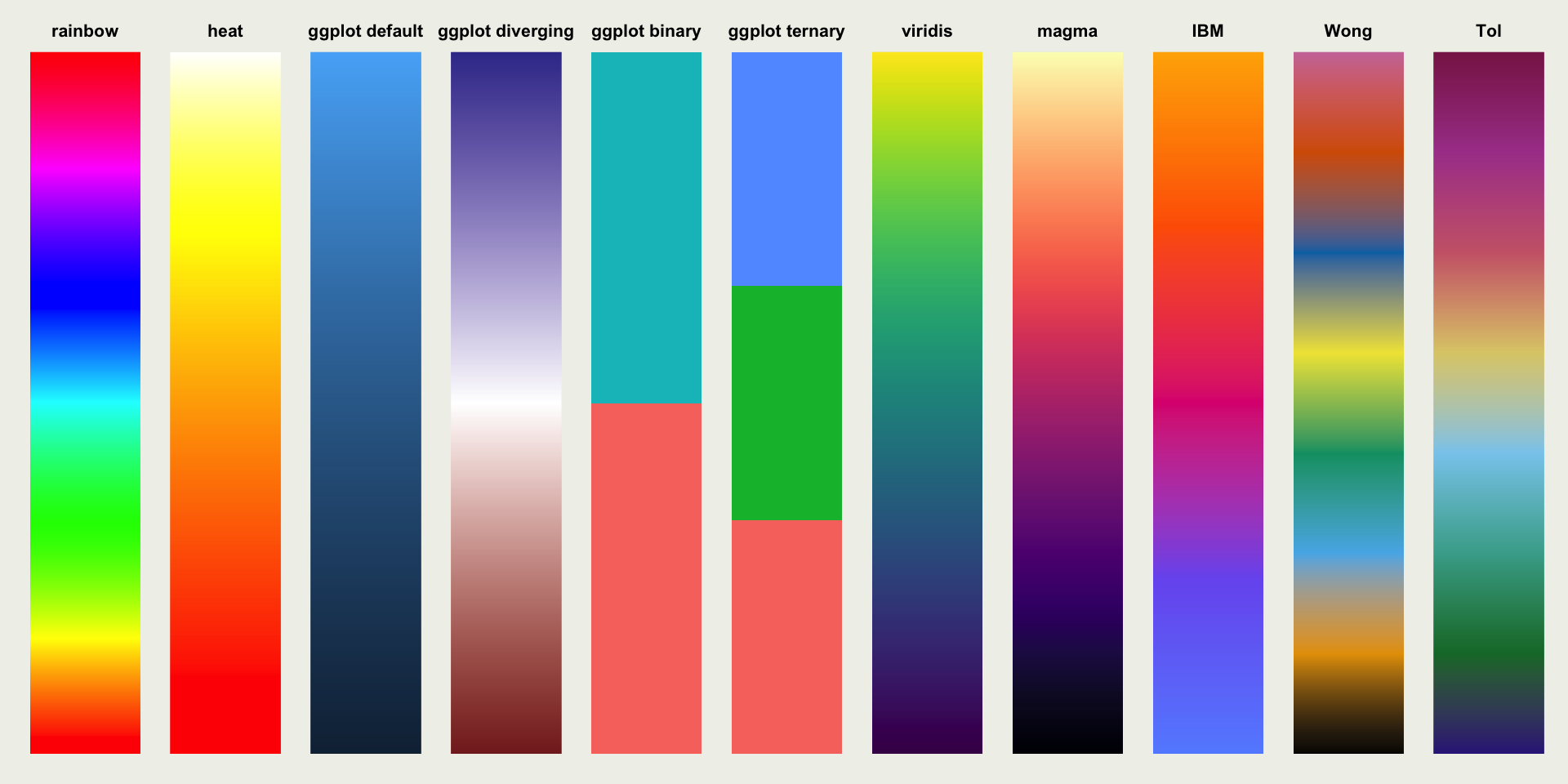
Let’s compare some different colour scales:
Colouring for Colourblindness (2/7)
Green-blind (deuteranopia):
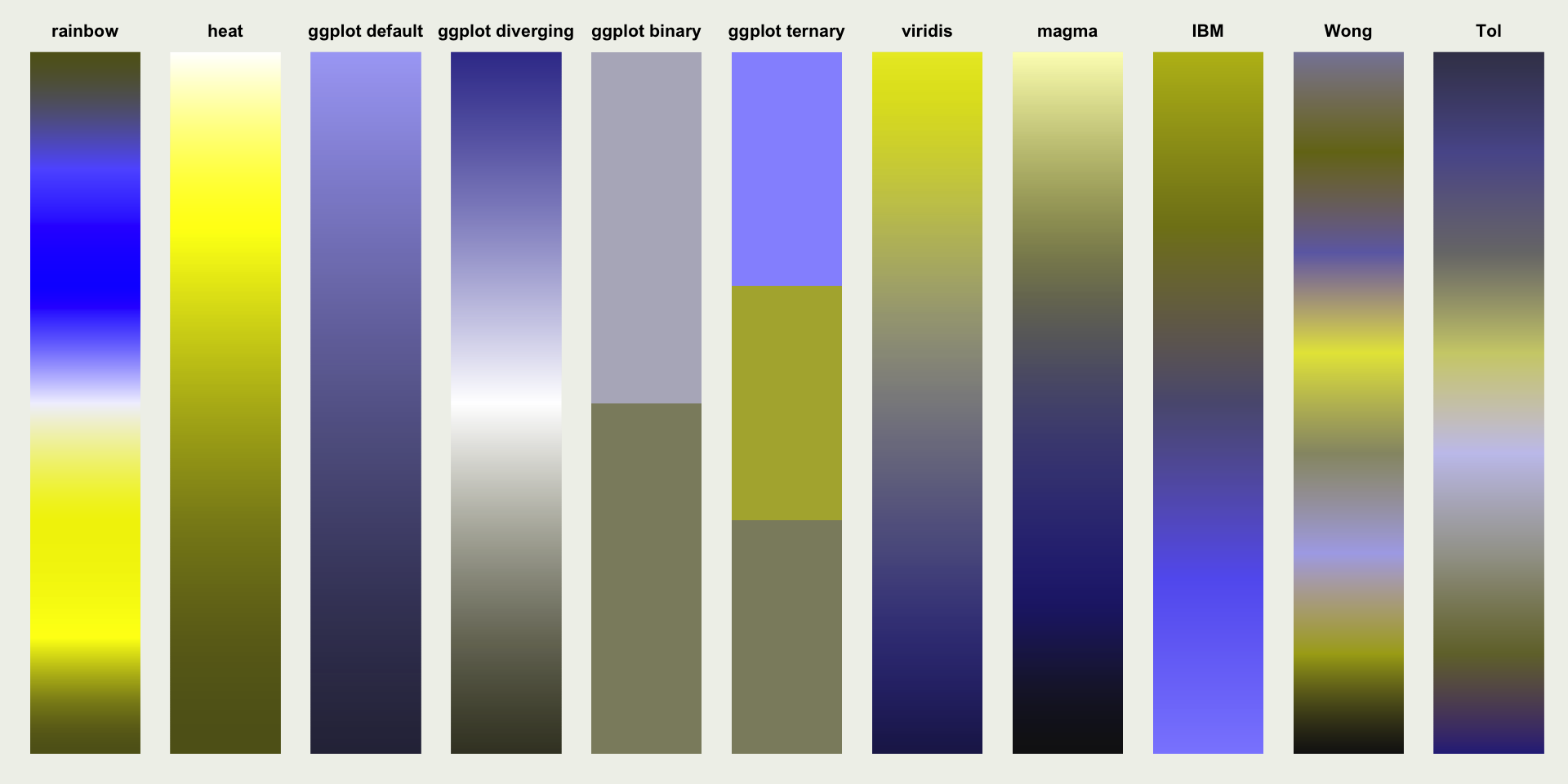
Colouring for Colourblindness (3/7)
Red-blind (protanopia):
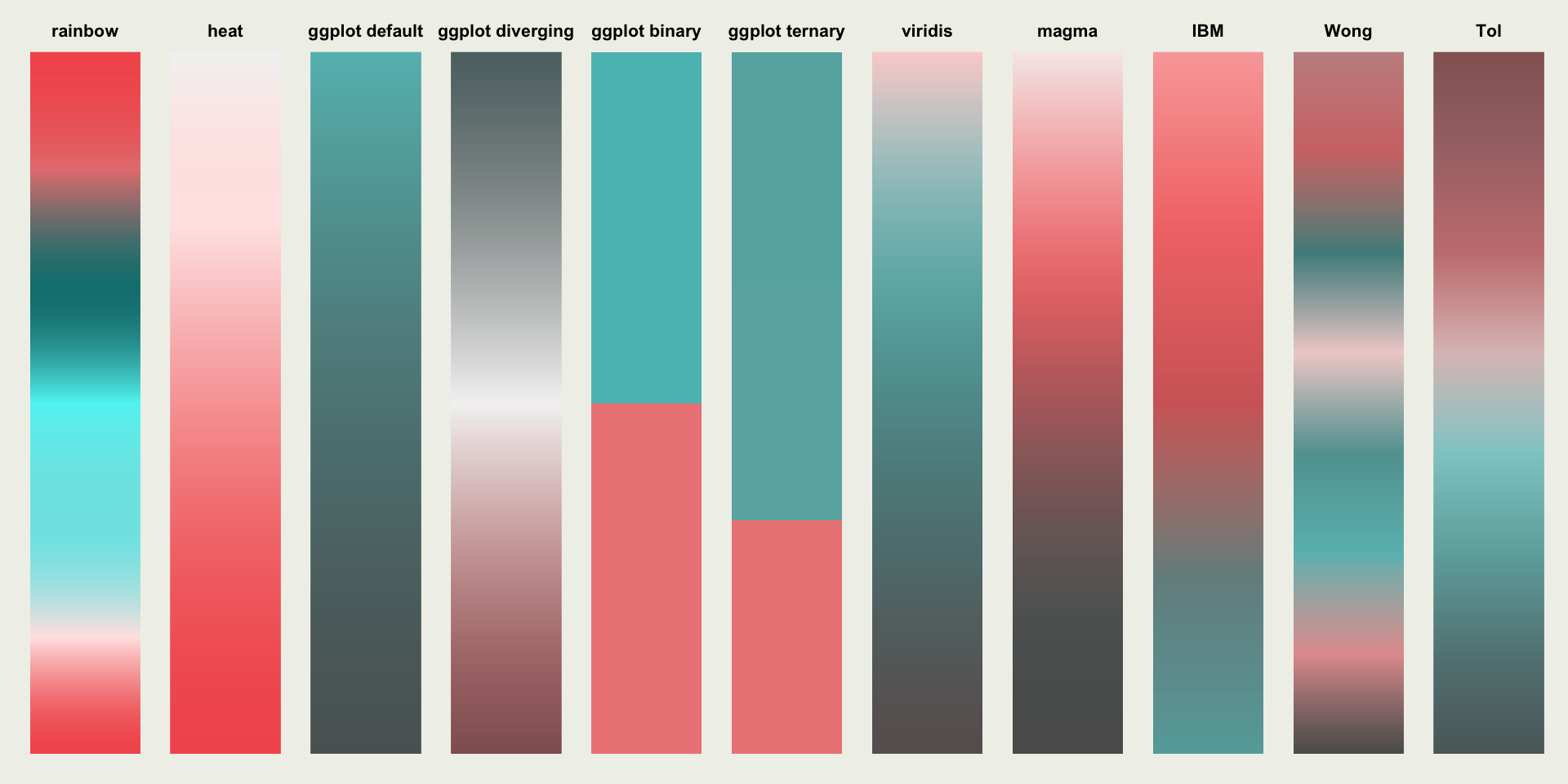
Colouring for Colourblindness (4/7)
Blue-blind (tritanopia):
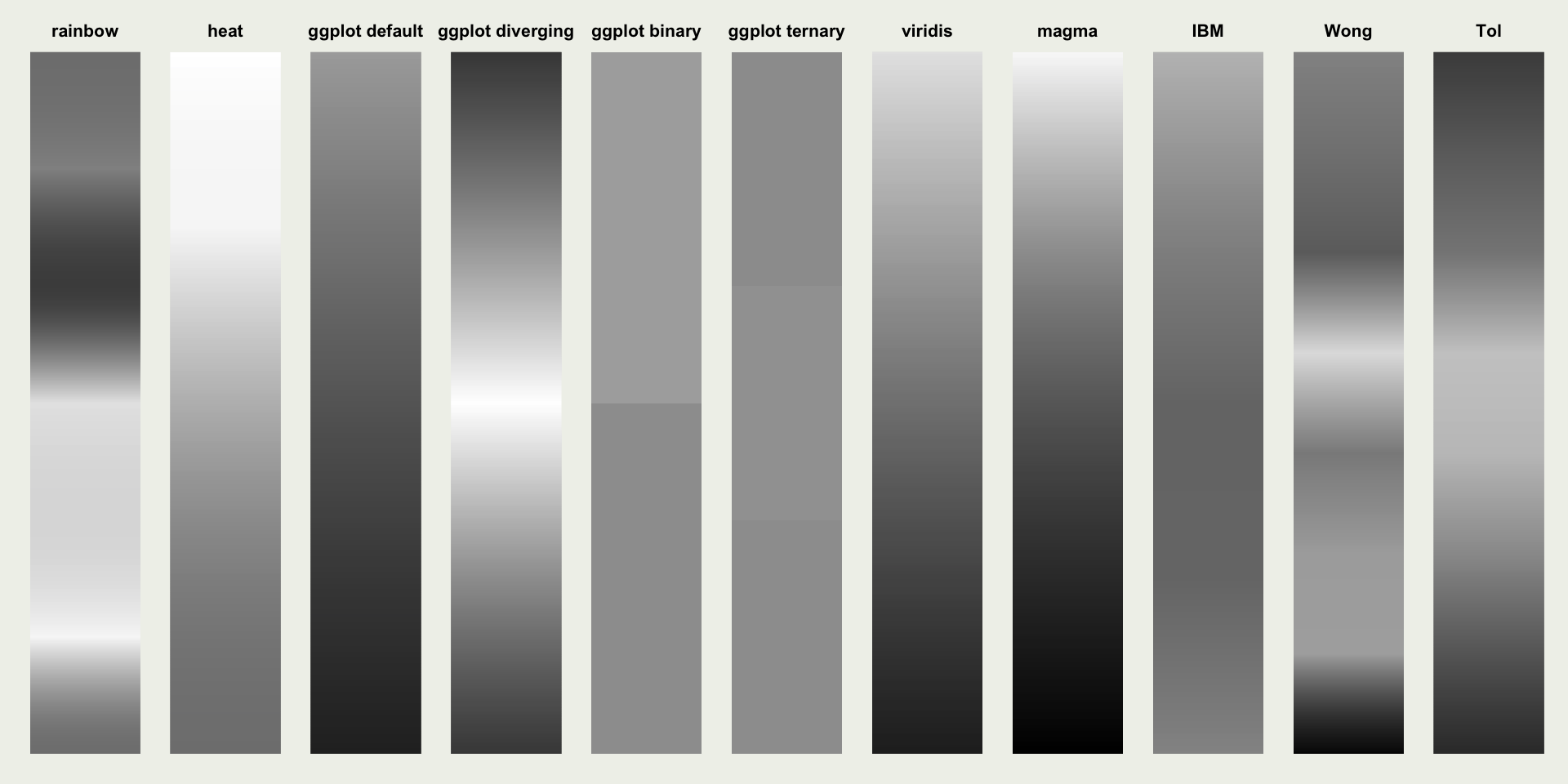
Colouring for Colourblindness (5/7)
Monochromacy (achromatopsia):
Colouring for Colourblindness (6/7)
Some colour scales are more accessible than others (viridis, magma, IBM. Wong, Tol)
No colour scale is perfectly accessible (and red-yellow-green definitely isn’t)
Some journals/institutions require specific colours (corporate identity)
Printing in black and white is often not sufficient
We should always convey meaning with more than just colours!
Colouring for Colourblindness (7/7)
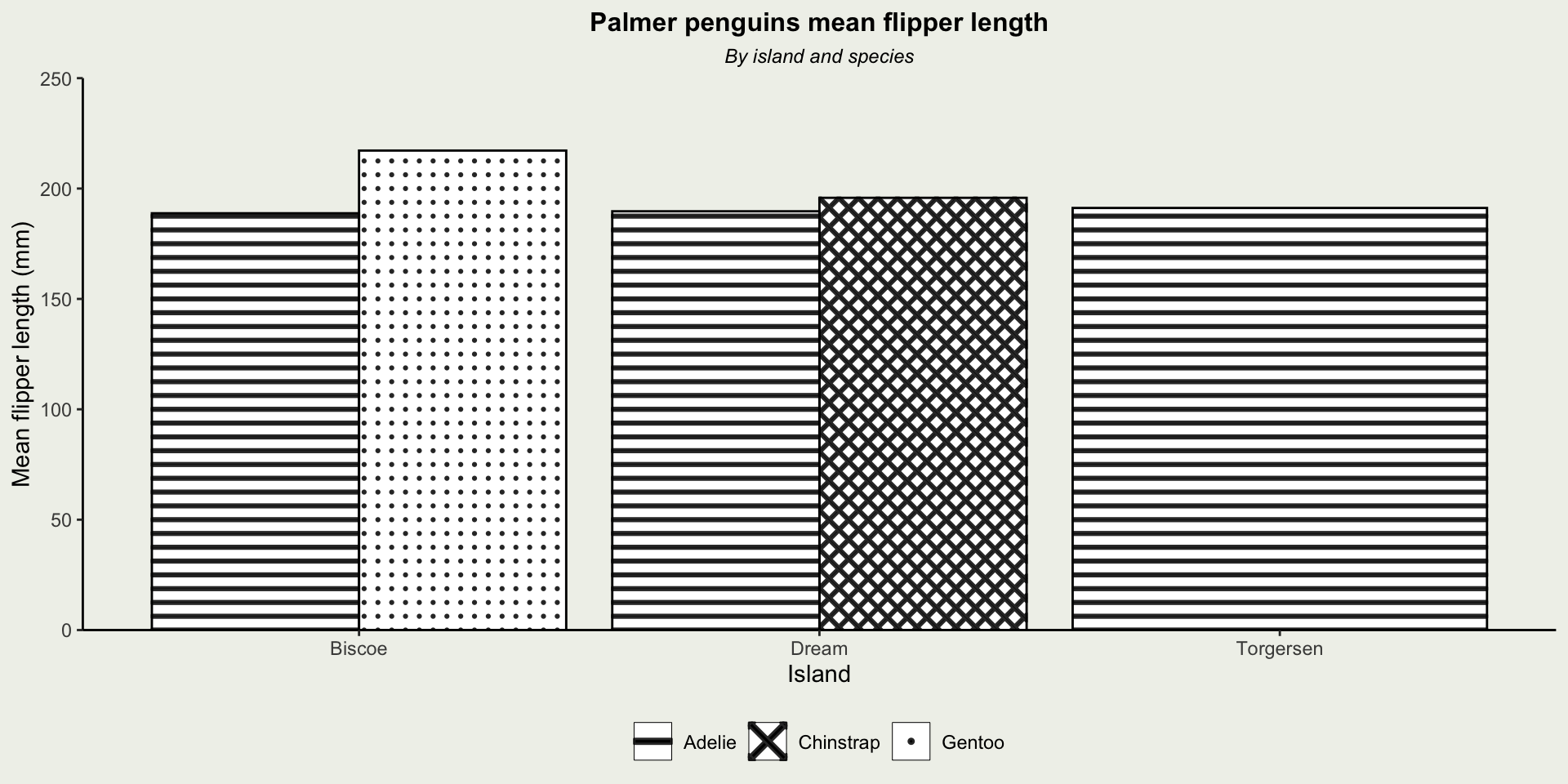
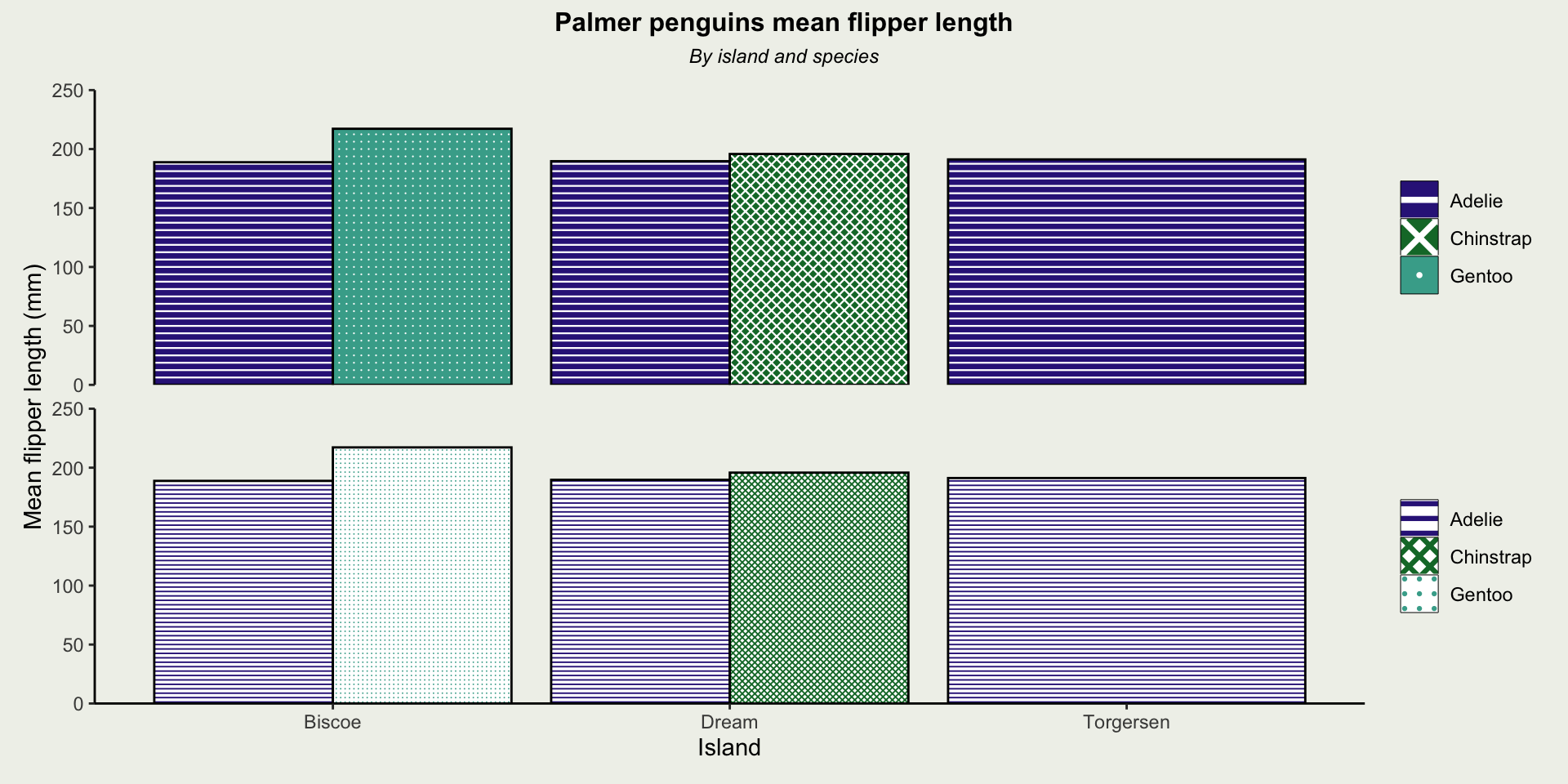
Shapes with areas can use patterns:
Substituting for Shapes (1/5)
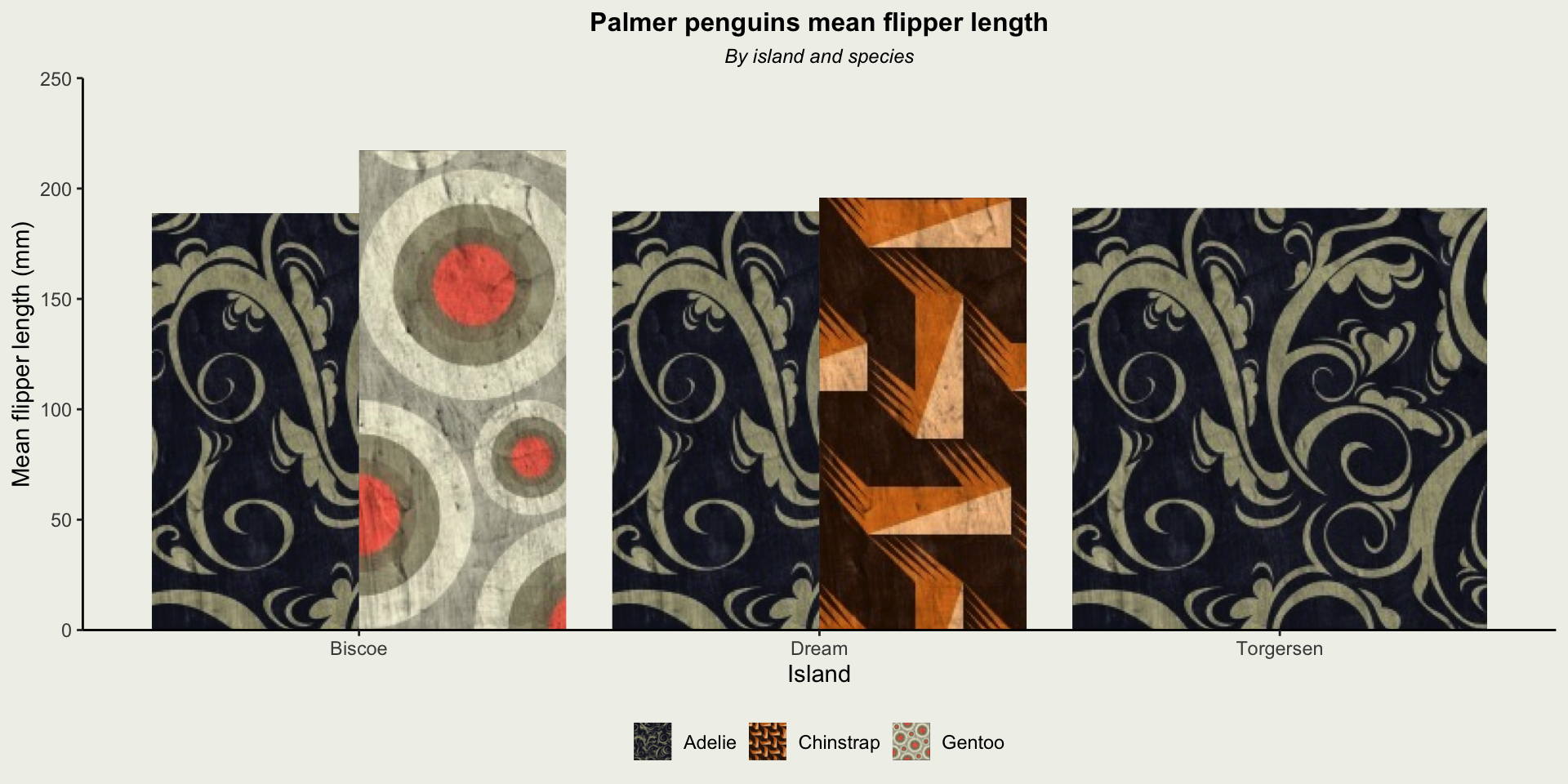
We can still use colours with patterns:
Substituting for Shapes (2/5)
Or just go crazy…
Substituting for Shapes (3/5)
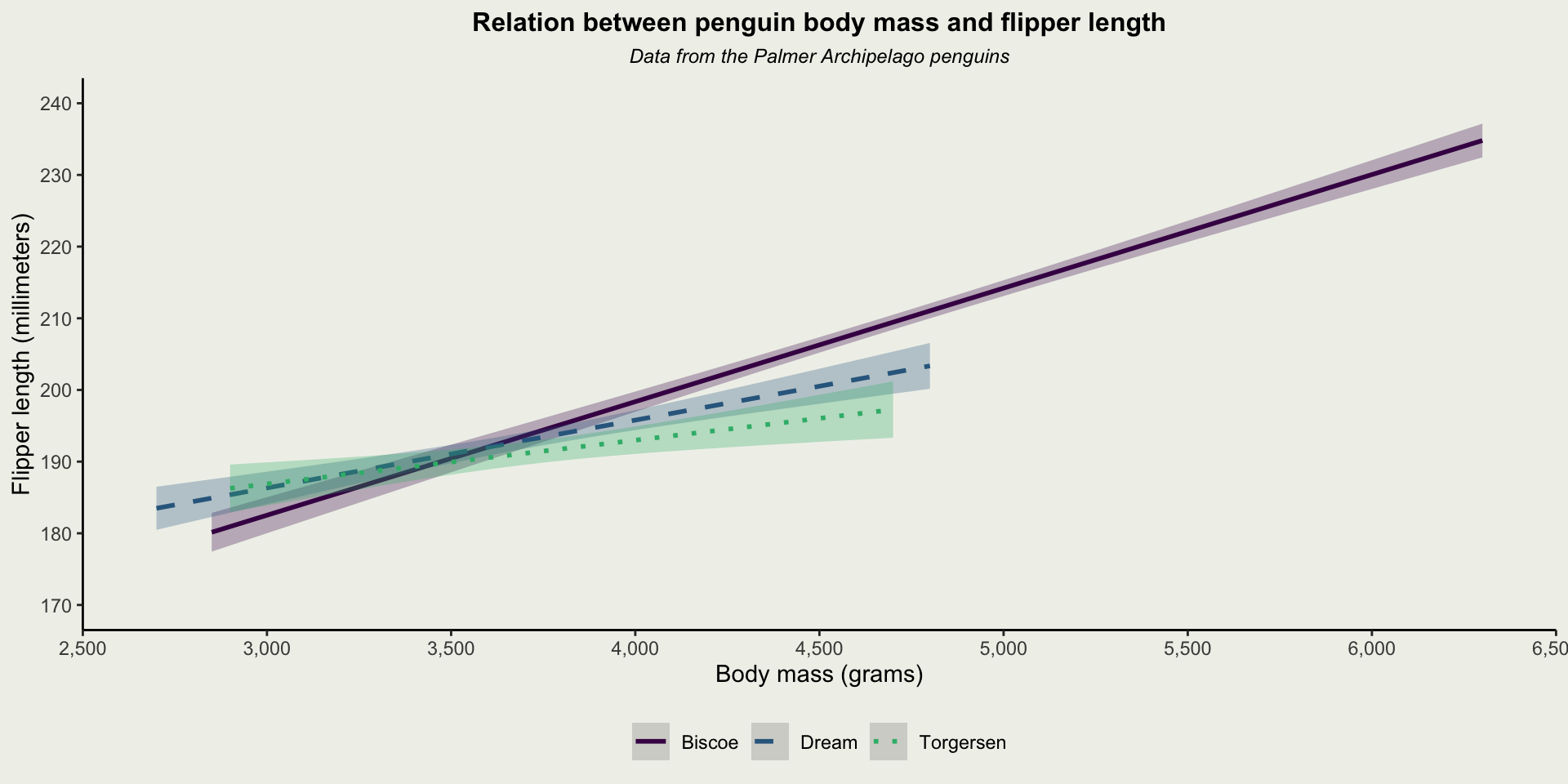
Lines can use linetypes:
Substituting for Shapes (4/5)
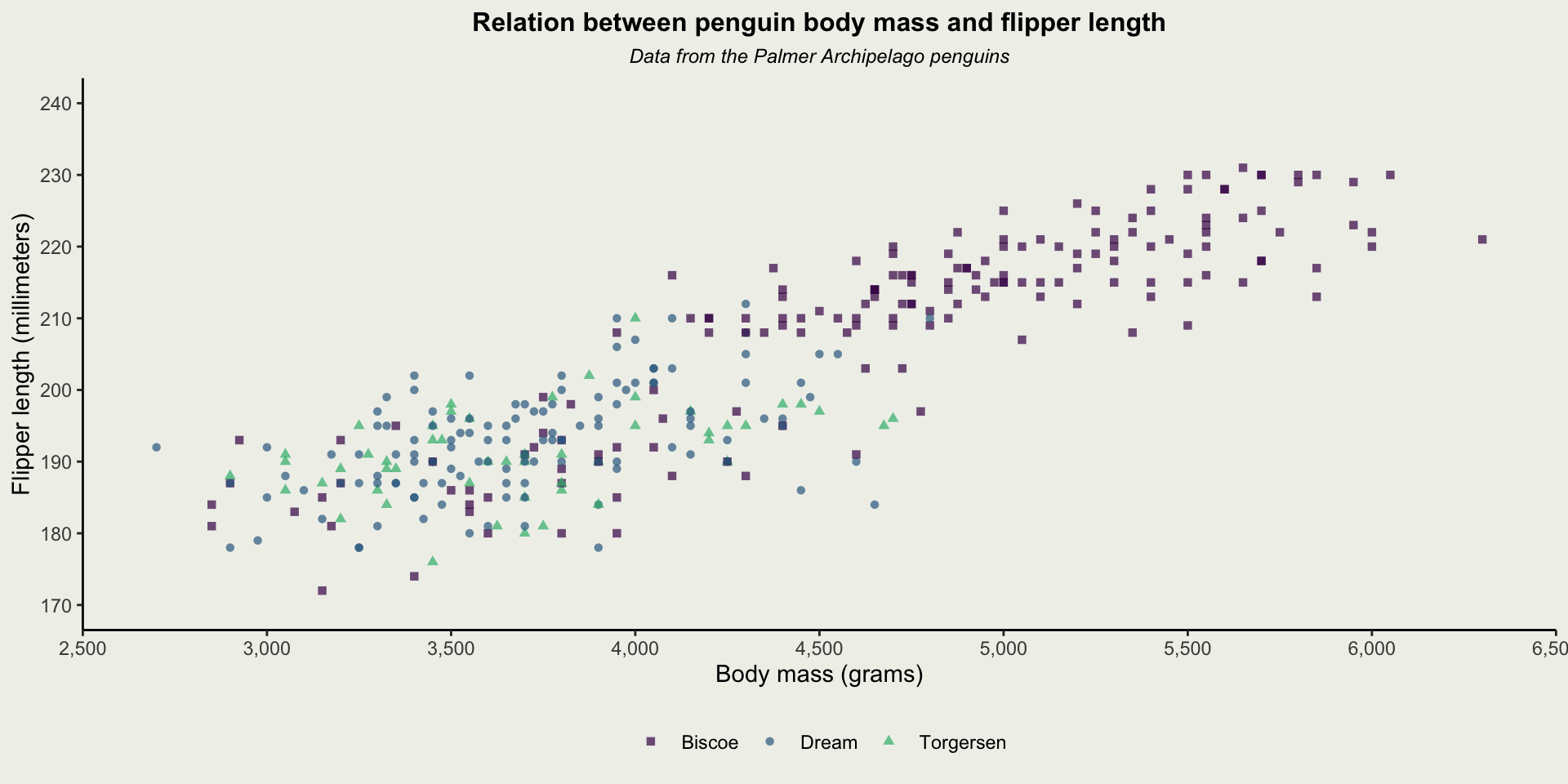
One-dimensional objects can shapeshift:
Substituting for Shapes (5/5)
Colour contrast is important!
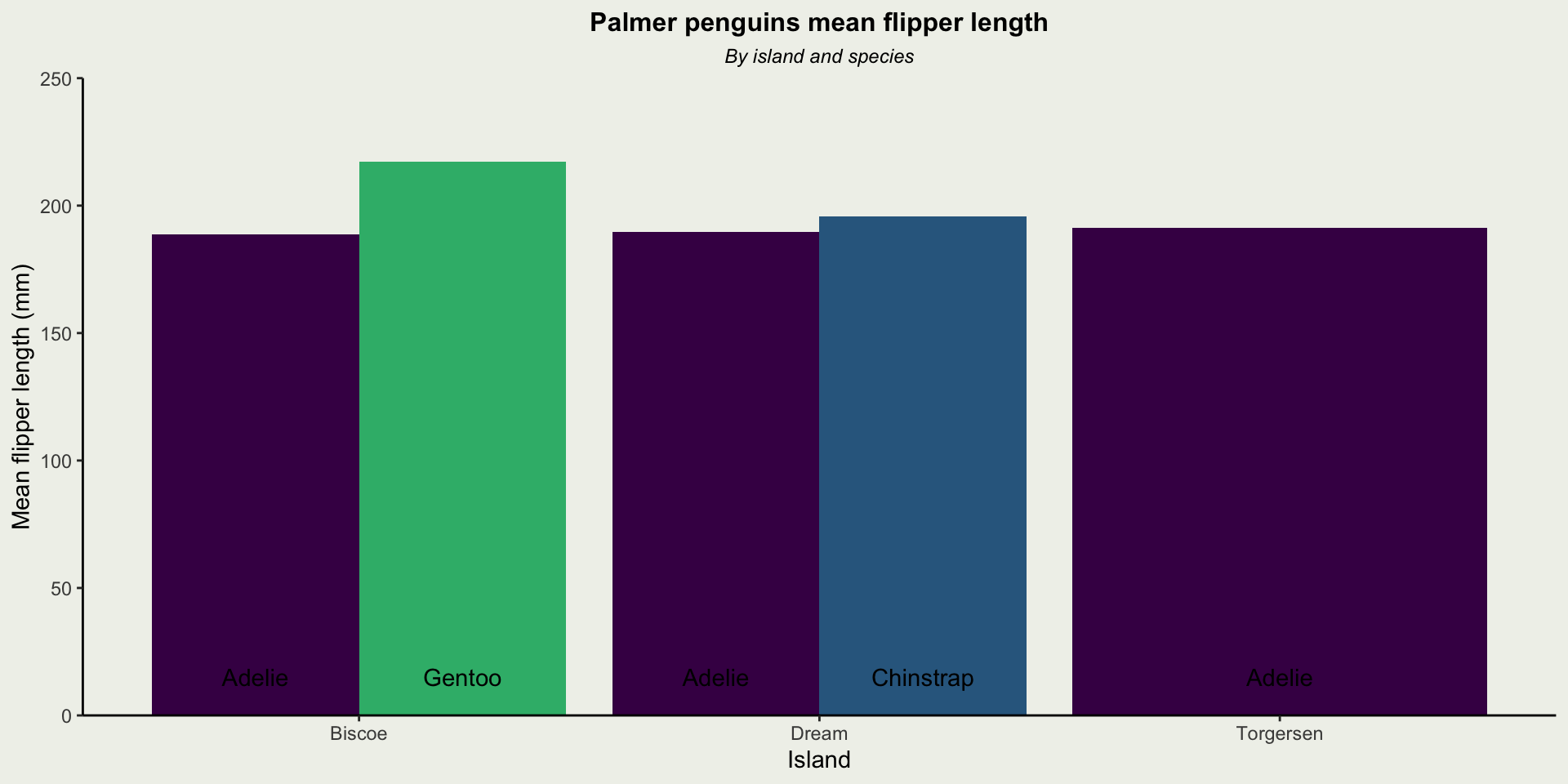
We might want to show text in our figures
The contrast between text and background colour is important for readability
Contrasting Colours (1/5)
Contrasting Colours (2/5)
Contrasting Colours (3/5)
Contrasting Colours (4/5)
Contrast ratio’s:
| Species | All black | Mixed black-white | Labelled |
|---|---|---|---|
| Adelie | 1.4 | 15.2 | 21 |
| Chinstrap | 3.5 | 6.0 | 21 |
| Gentoo | 8.2 | 8.2 | 21 |
Ideal is 7:1 or 4.5:1 for larger text
Contrasting Colours (5/5)
Calculate contrast ratio’s: https://snook.ca/technical/colour_contrast/colour.html
Considering colours: https://blog.datawrapper.de/colors/
Grey as a go-to: https://visualisingdata.com/2015/01/make-grey-best-friend/
Considering colourblindness: https://blog.datawrapper.de/colorblindness-part2/#Colorblind-safe-color-palettes
We have many design choices when making our figures
Some design choices may influence the message we convey
Other design choices influence whether we convey a message at all
3D barcharts? Don’t.
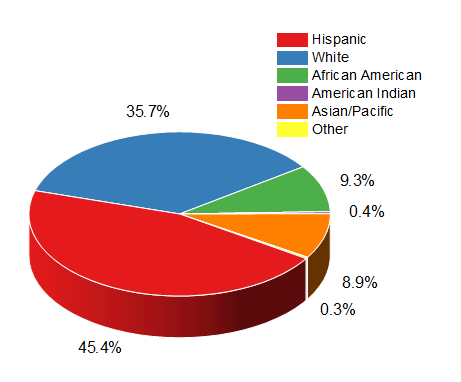
3D piecharts? Don’t.
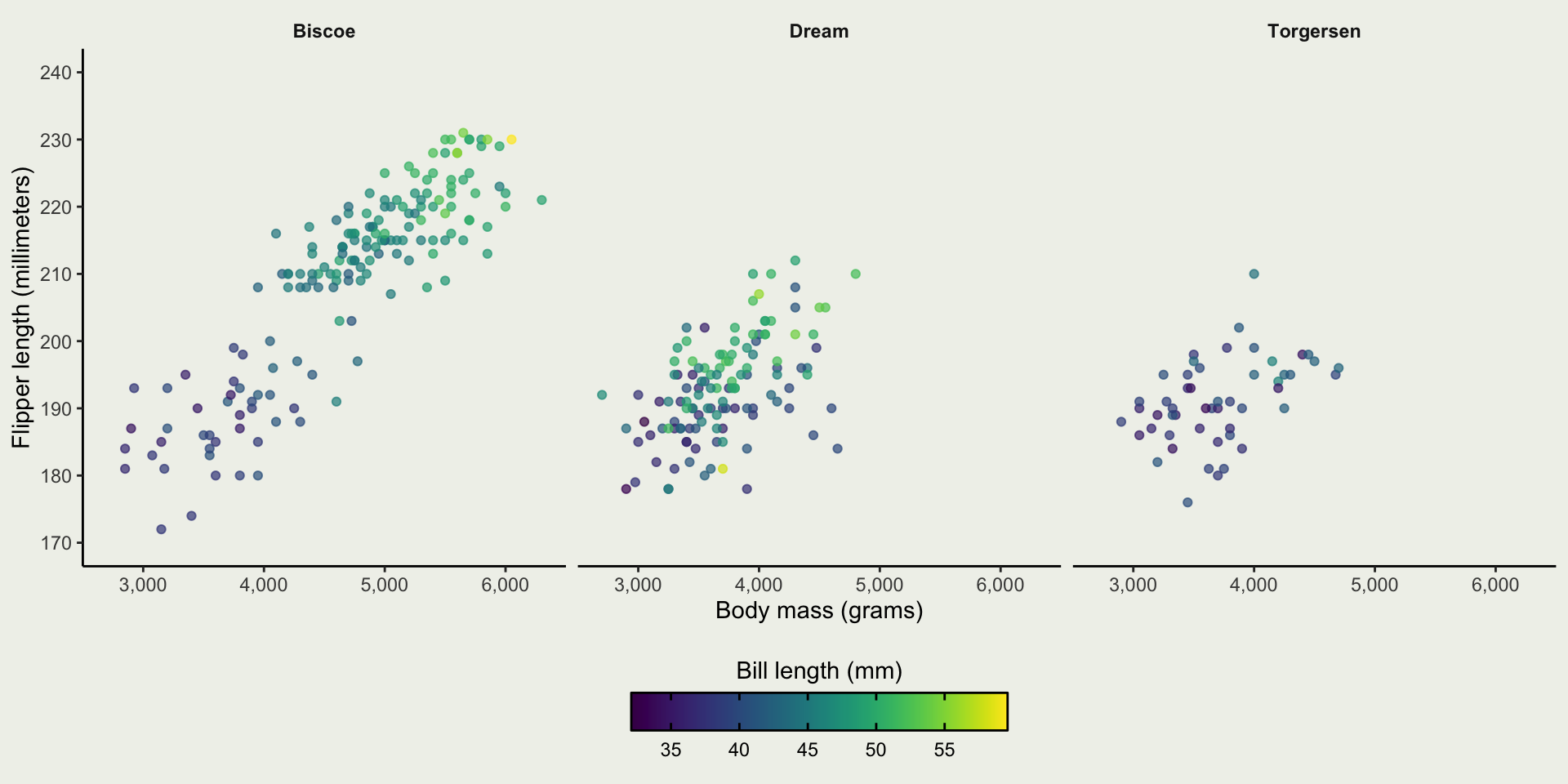
3D scatterplots? Perhaps…
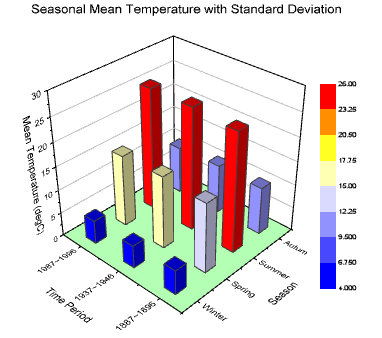

Issues:
Distorted angles/bar heights
Difficult to gauge exact values
Extra dimension might be communicated through other means
3D scatterplots (1/2)
3D scatterplots (2/2)
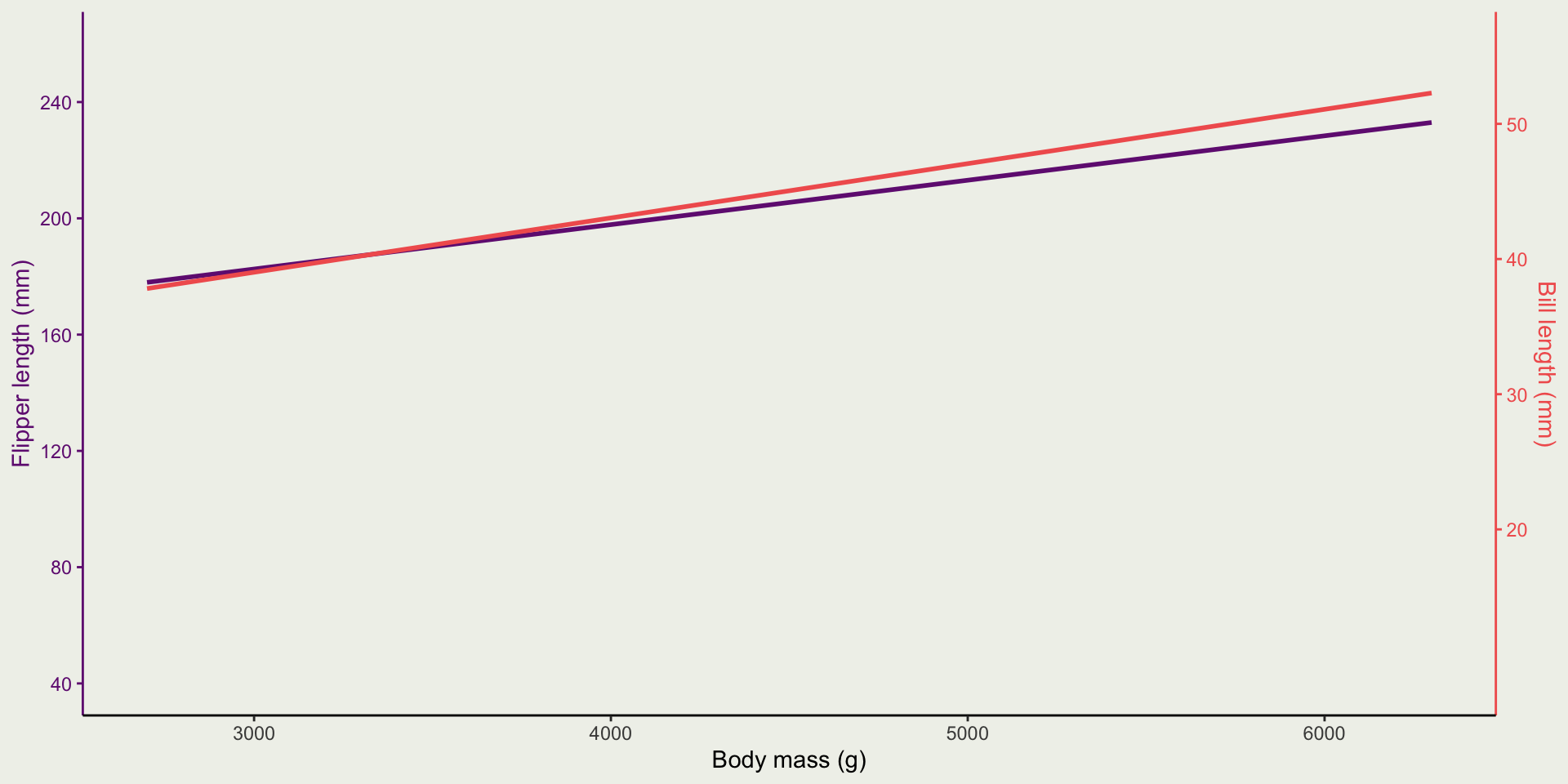
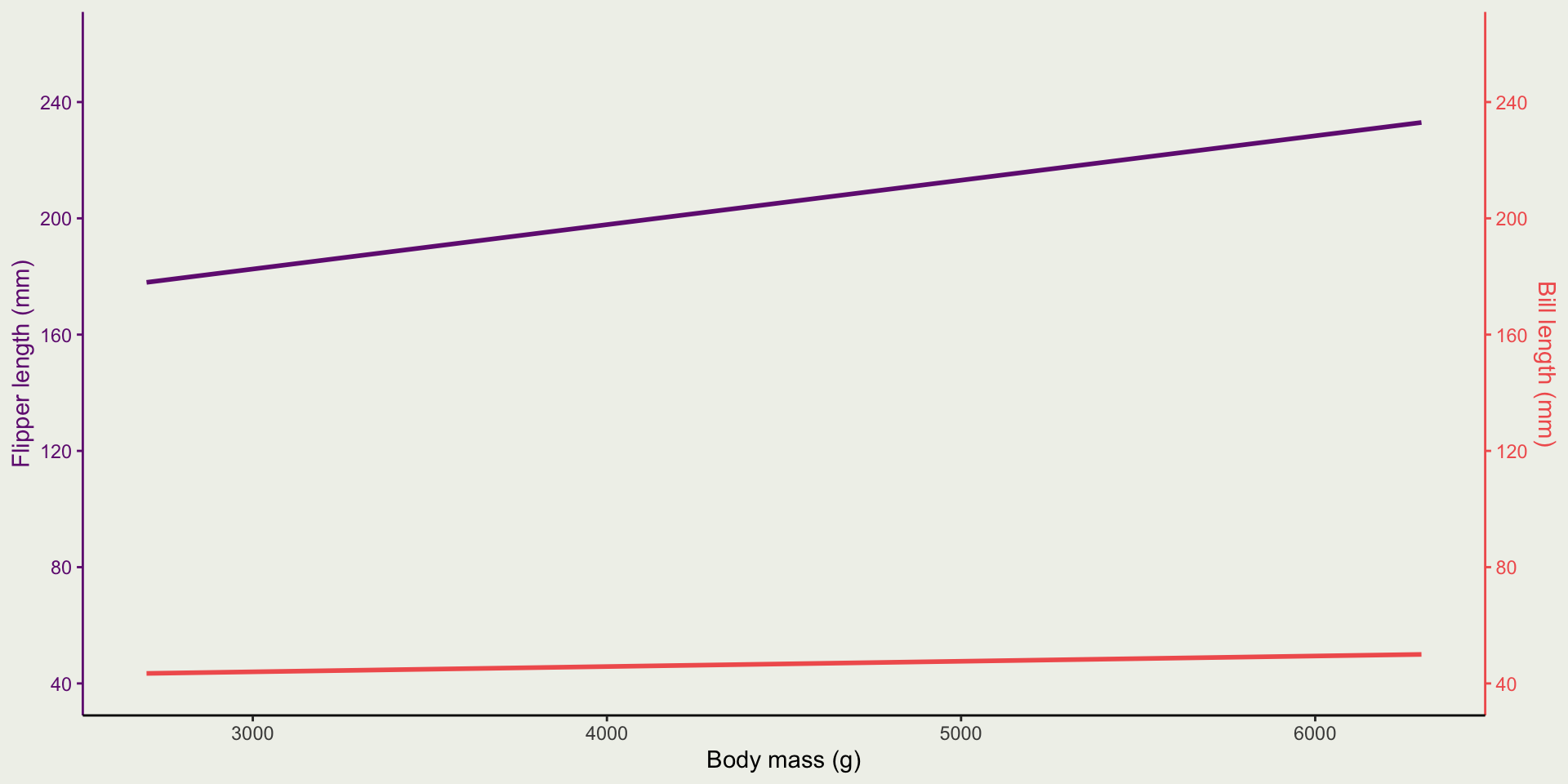
Dual Axes (1/5)
Dual Axes (2/5)
Dual Axes (3/5)
Dual Axes (4/5)
Dual axes can make it easy to mislead people (false correlations)
Especially a problem if the two axes are not monotonically related
In general they are harder to read
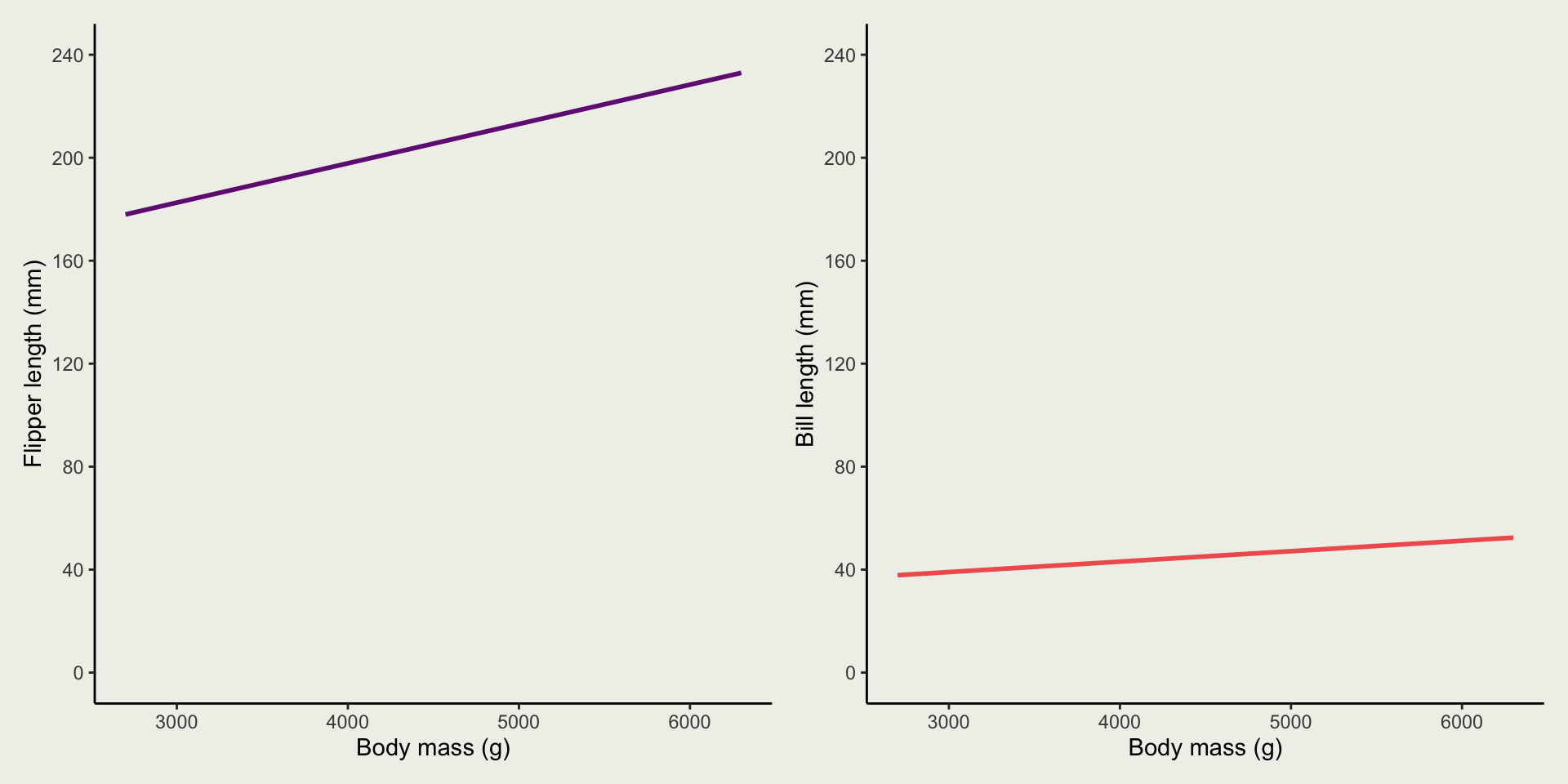
Instead:
Dual Axes (5/5)
Some y-axes have clearly defined ranges
Some y-axes have some sensible range (e.g. lab-values)
Some y-axes have a sensible limit at one side (e.g. height)
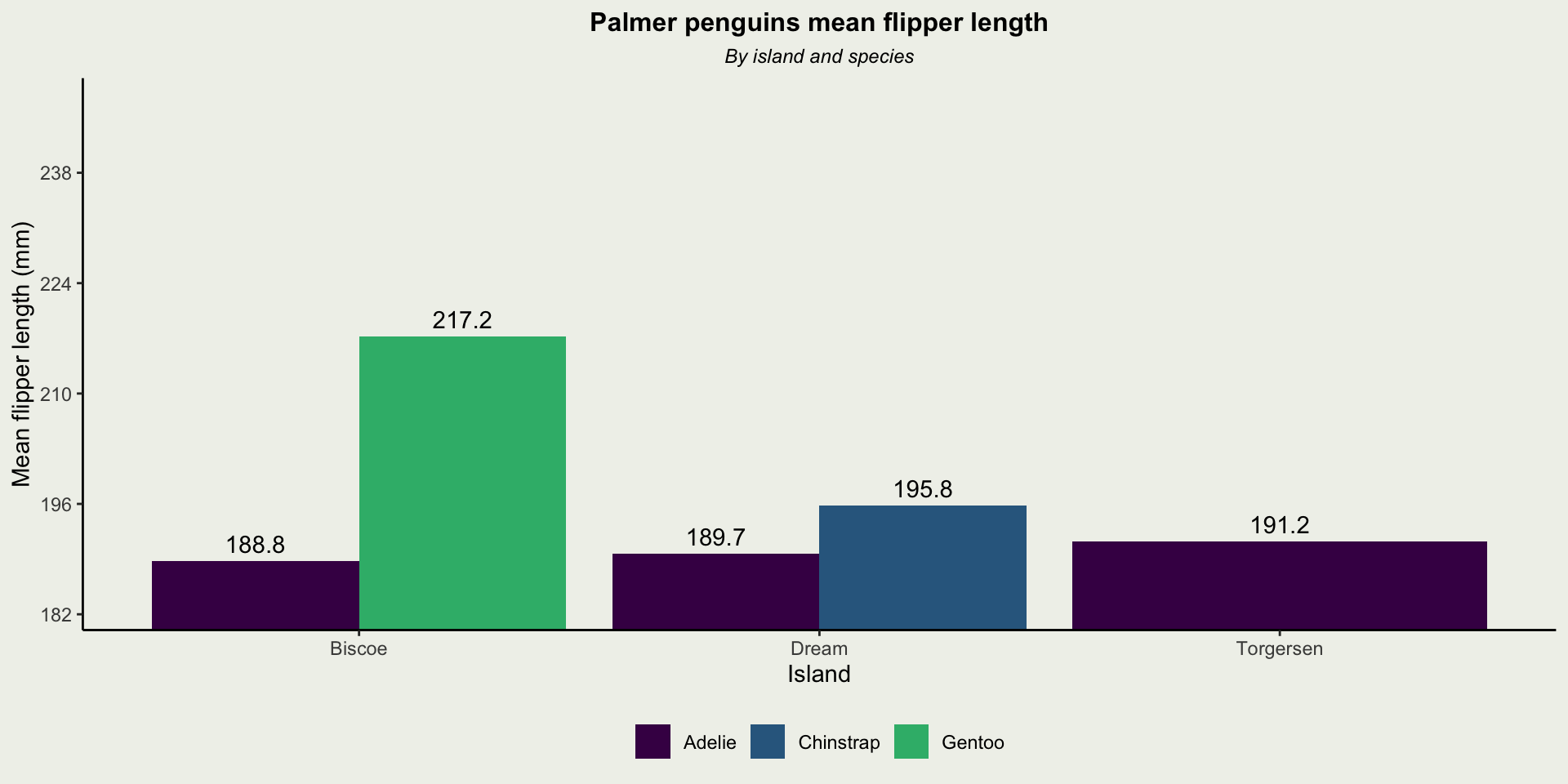
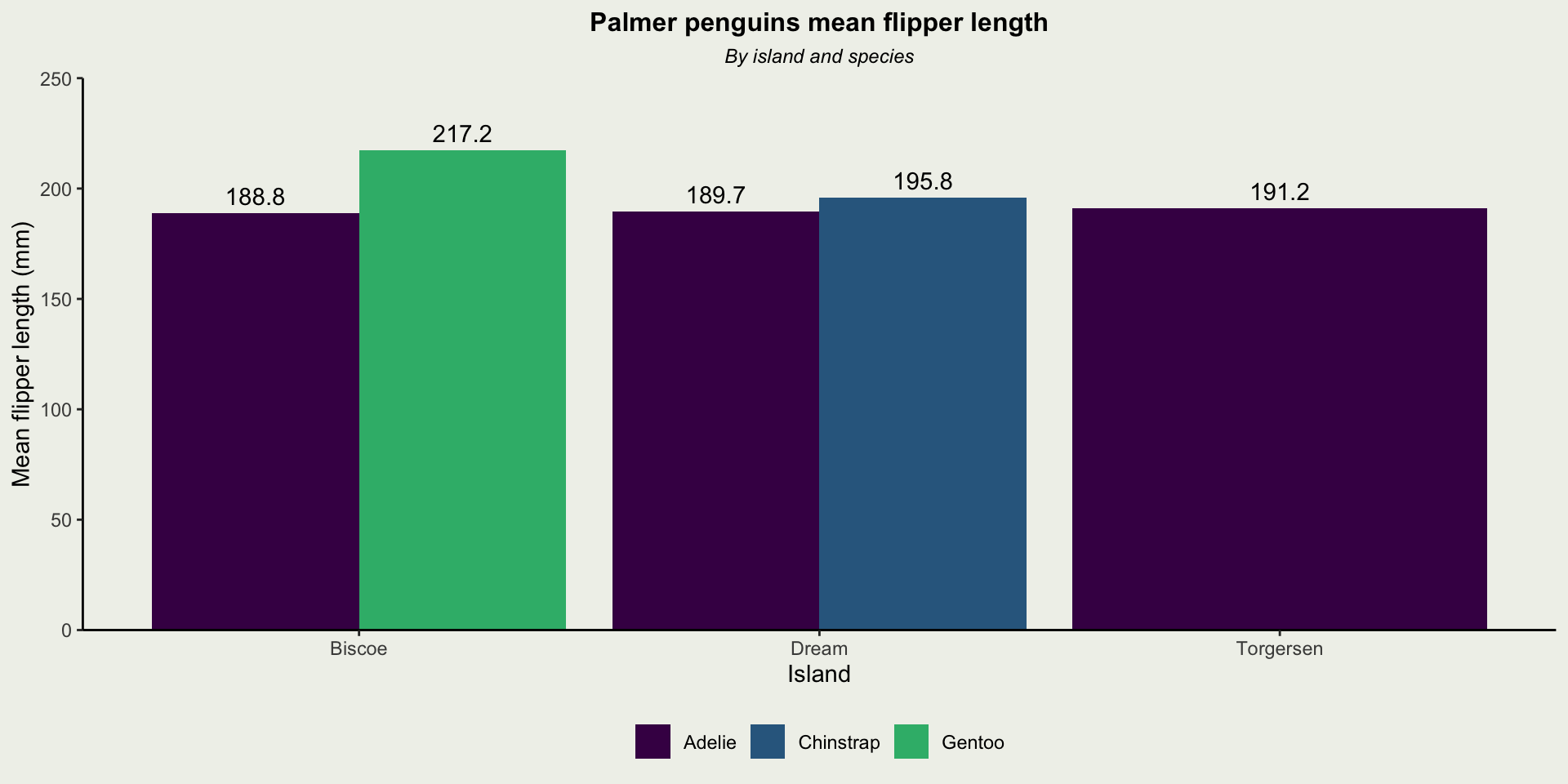
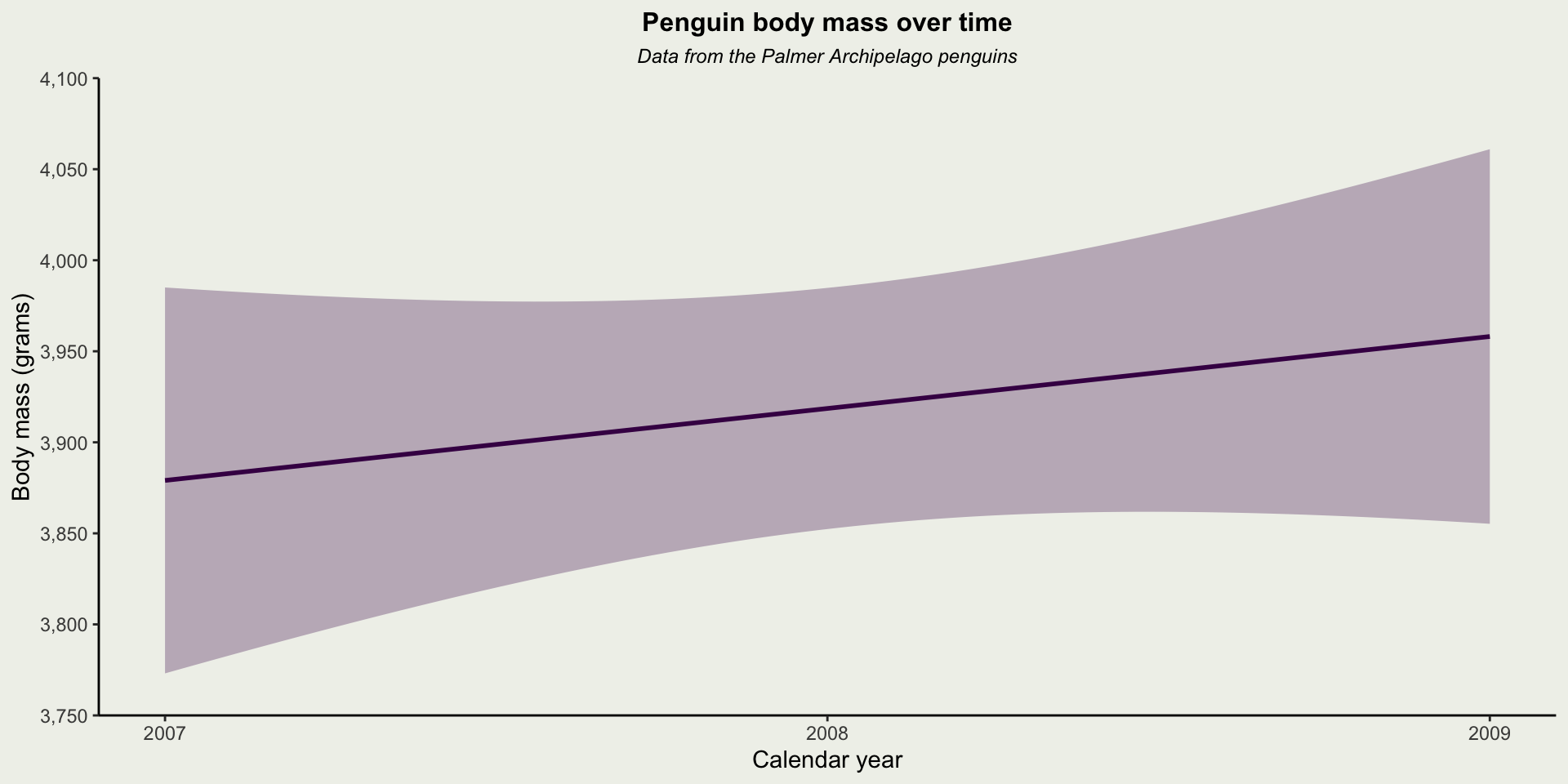
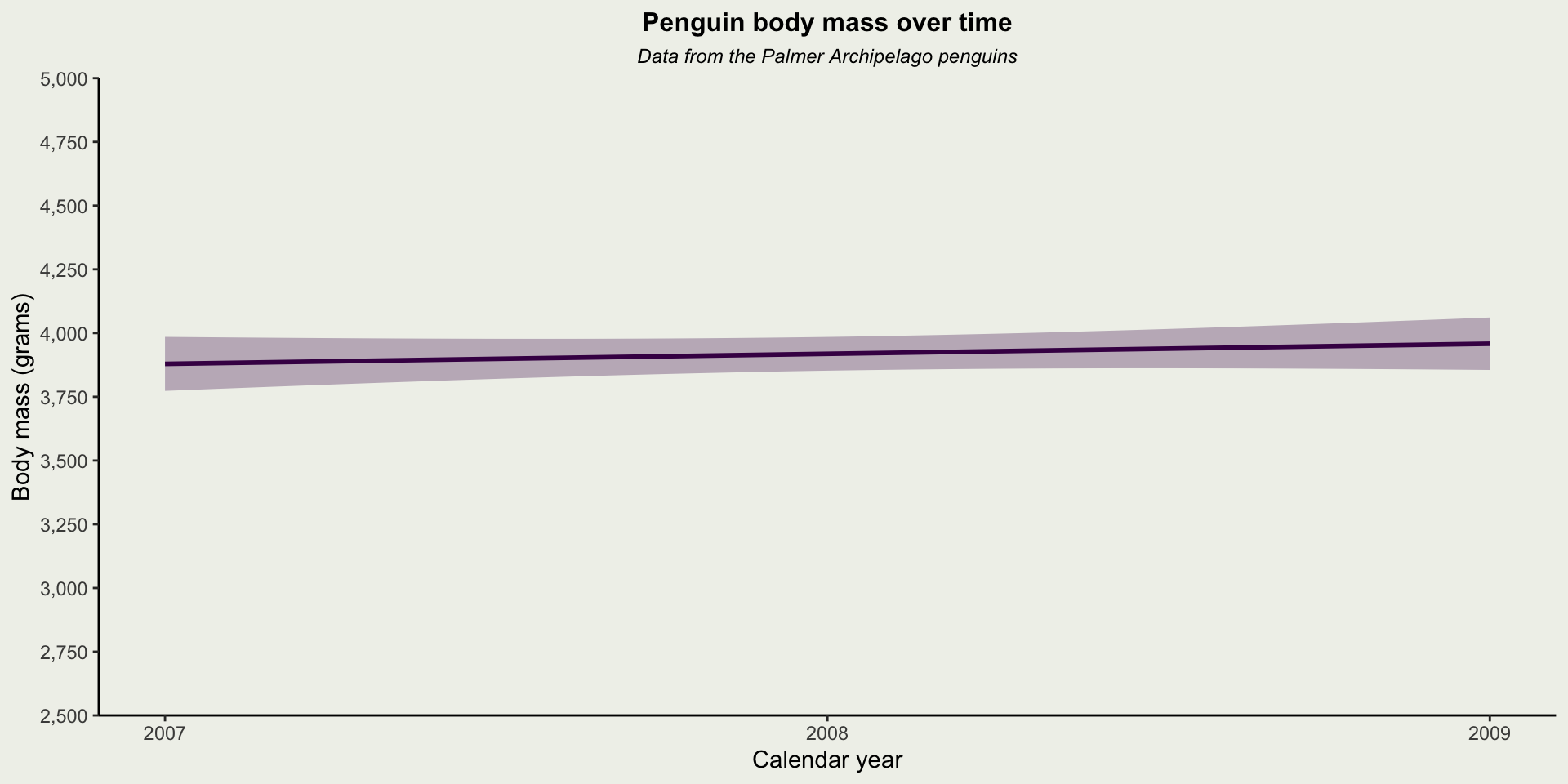
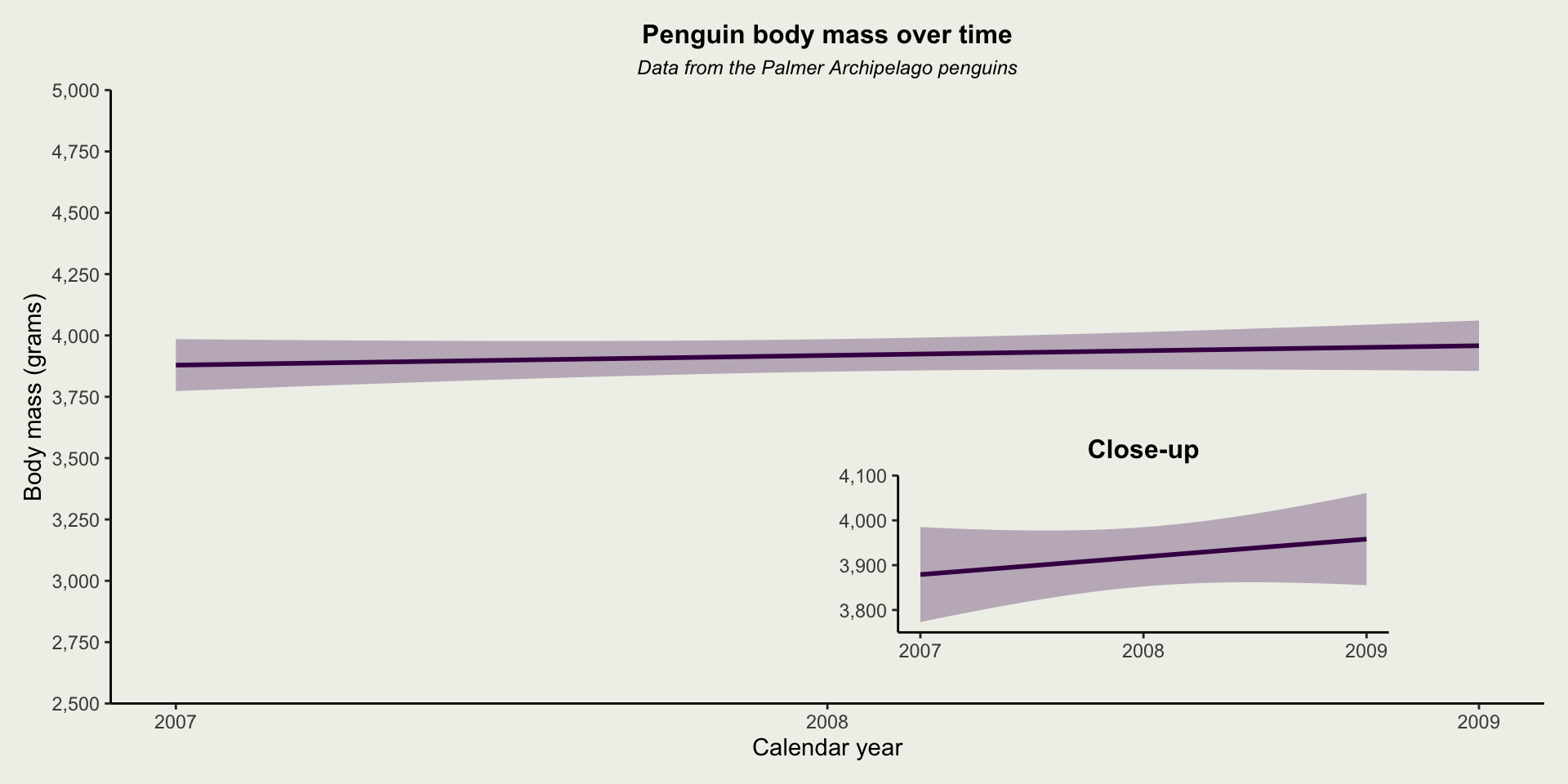
Cutting axes may make it seem like the effect is larger than it actually is
Cutting Corners (1/6)
Cutting Corners (2/6)
Cutting Corners (3/6)
Cutting Corners (4/6)
Cutting Corners (5/6)
Cutting Corners (6/6)
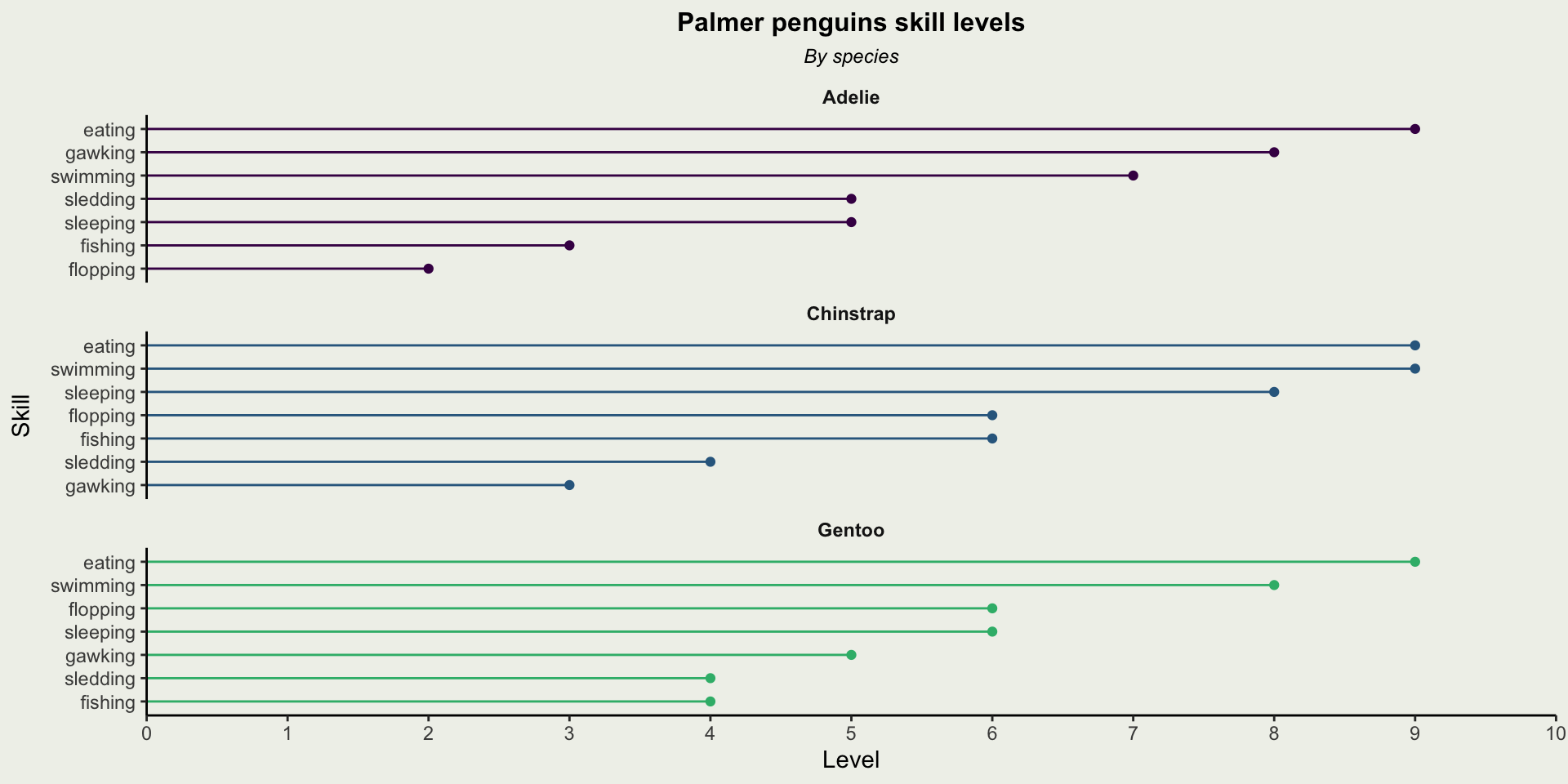
Many different types of graphs have been thought of
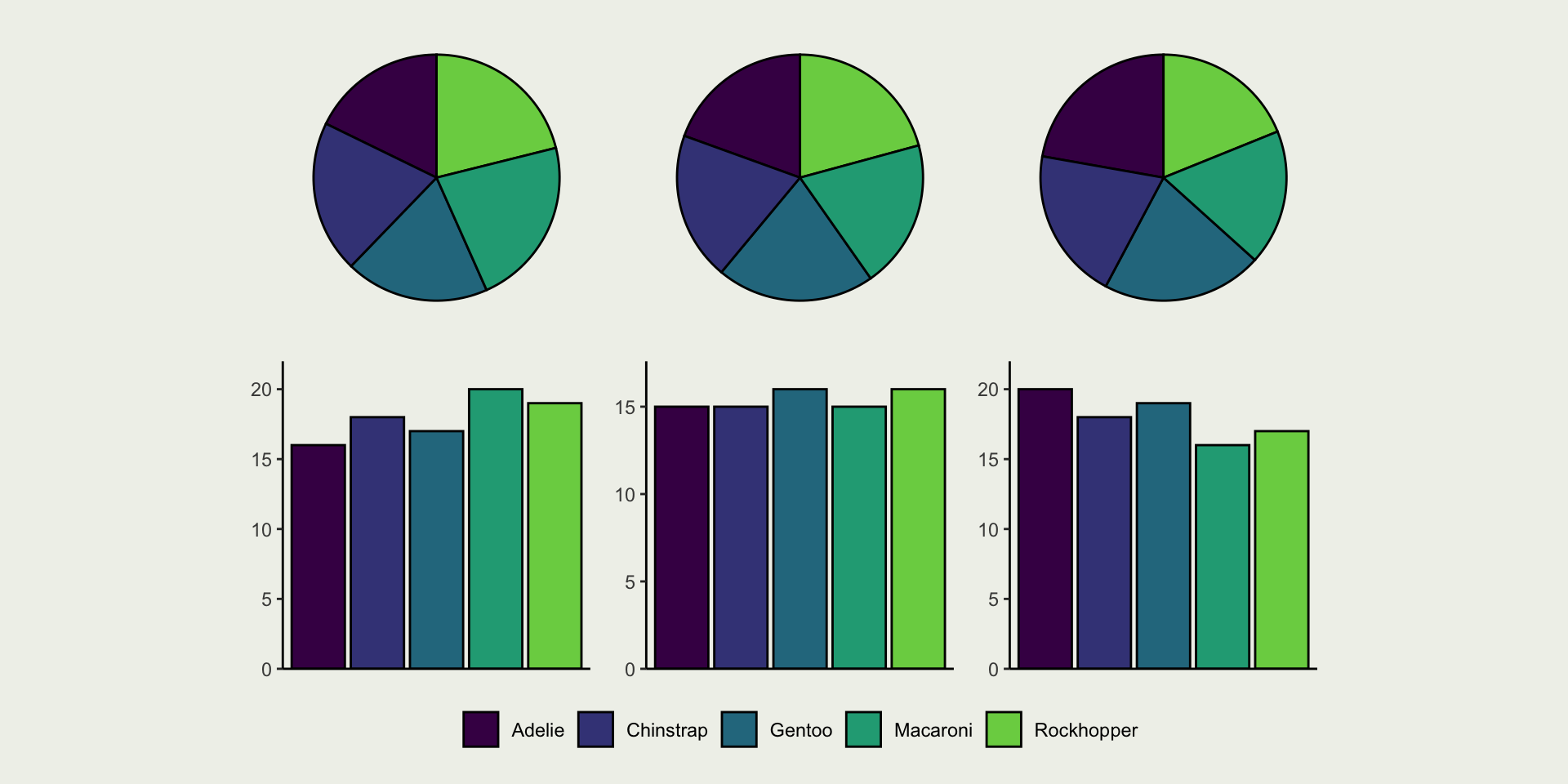
For the same data, multiple alternatives exist
Not each alternative is as equipped to convey the message (validly)
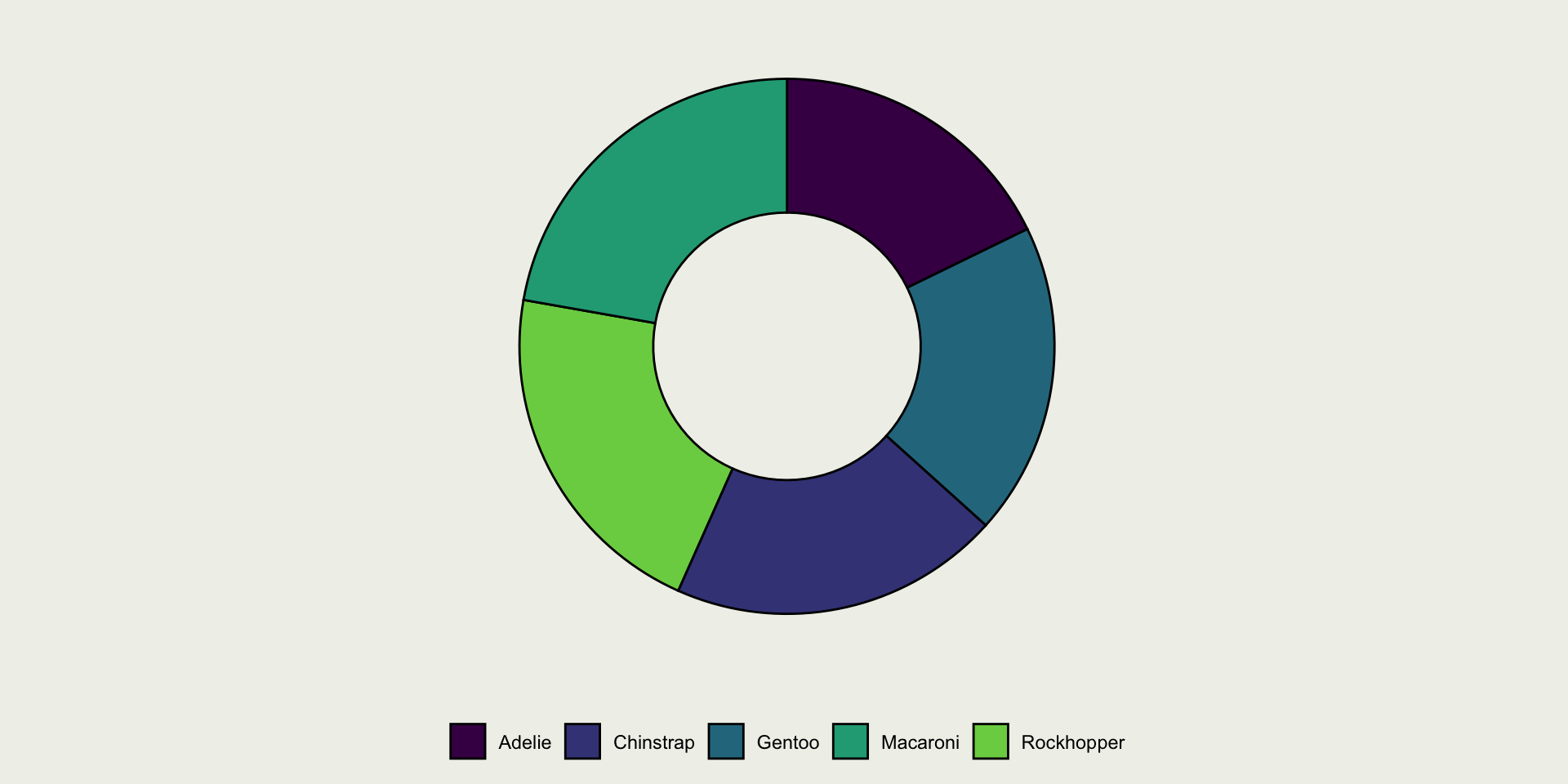
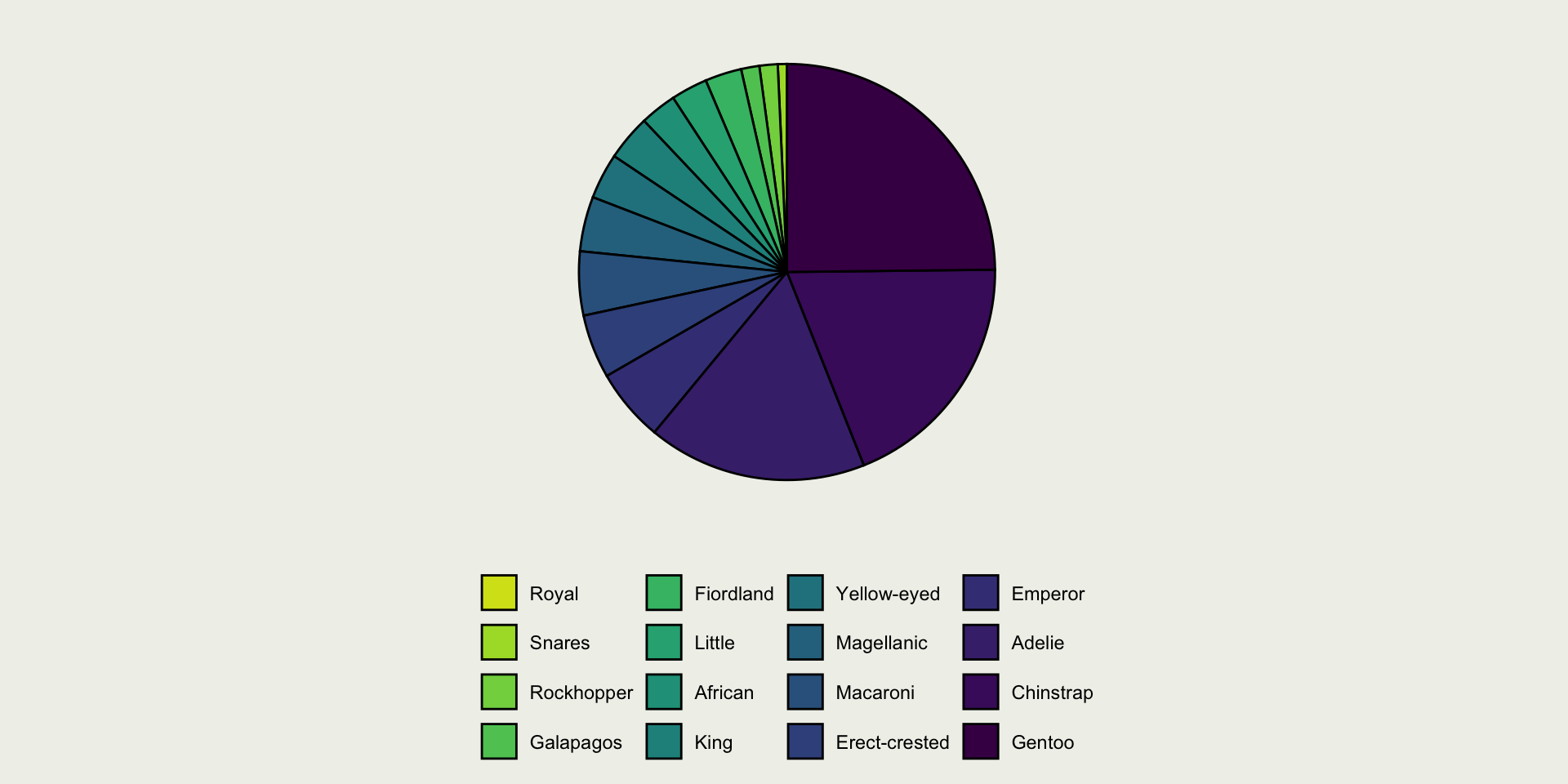
Pie Charts (1/3)
Pie Charts (2/3)
Pie Charts (3/3)
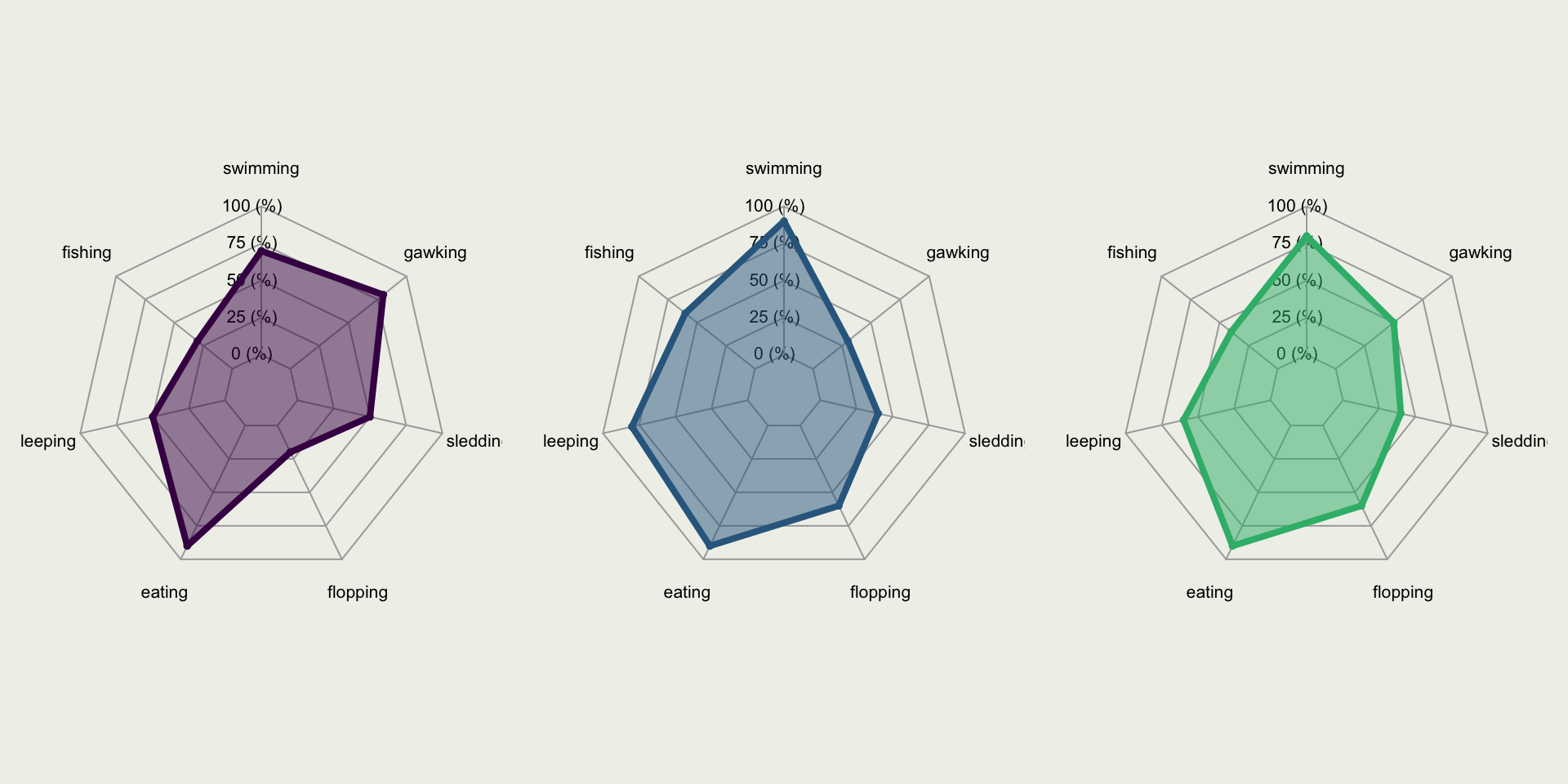
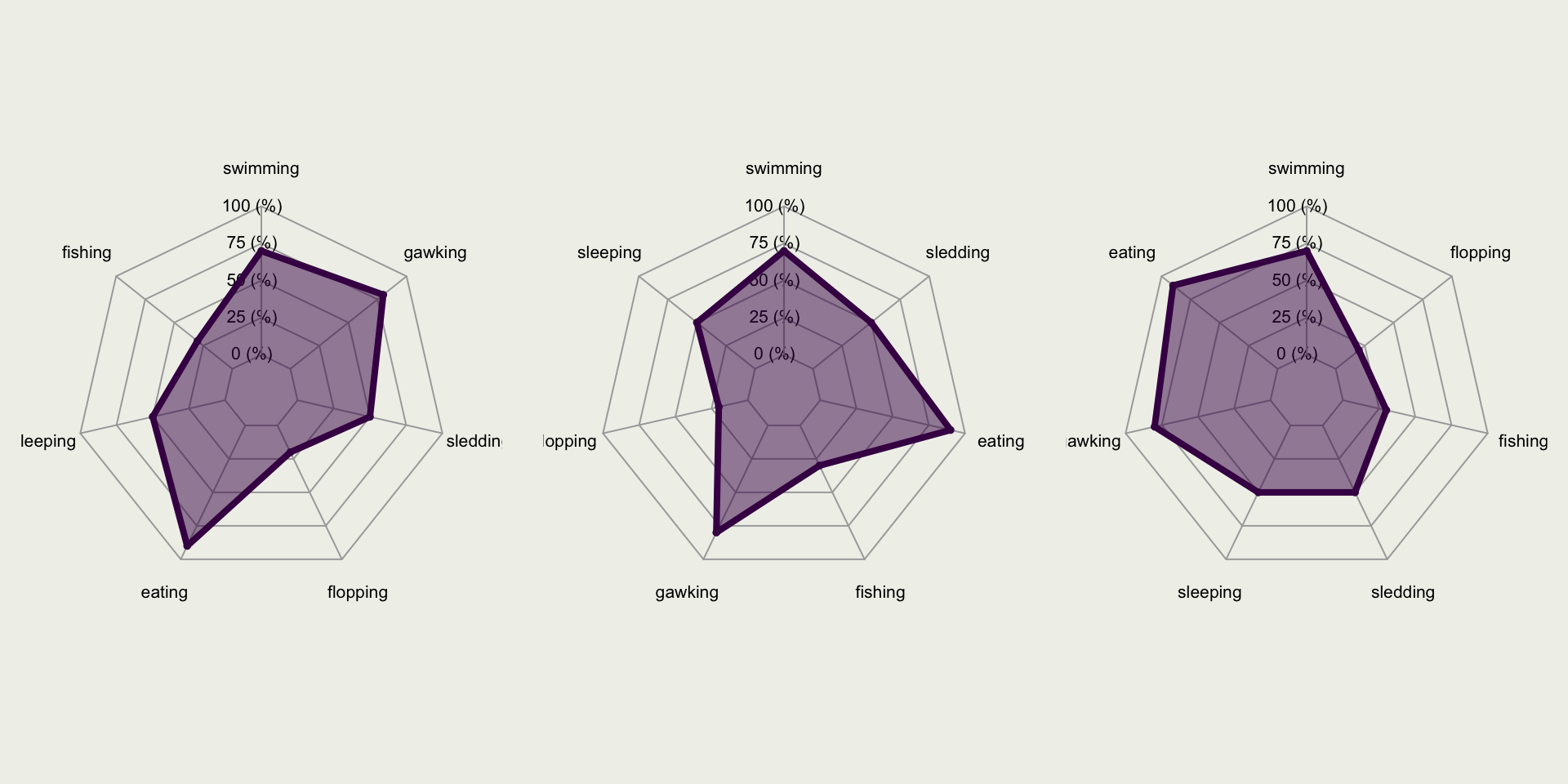
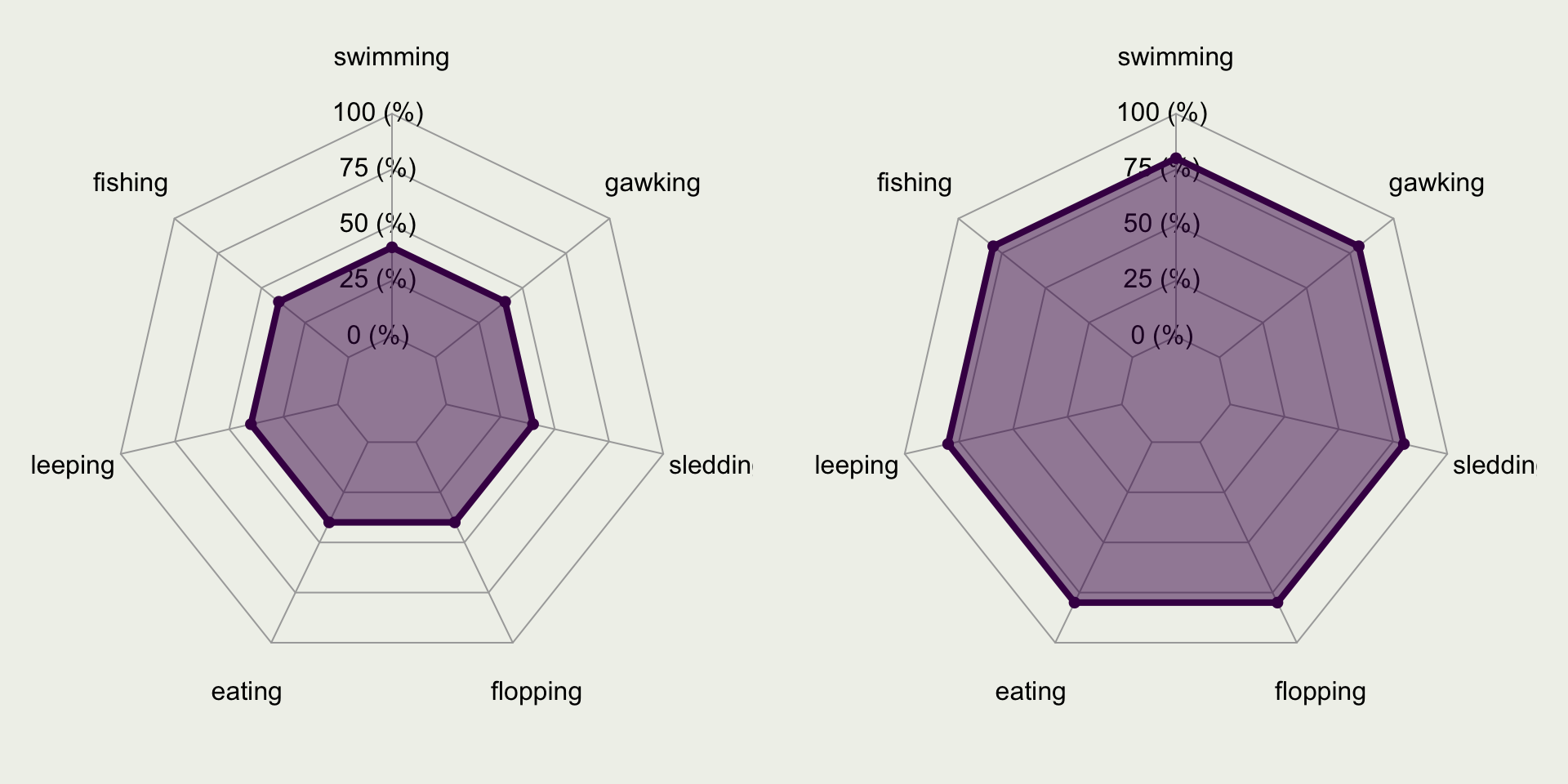
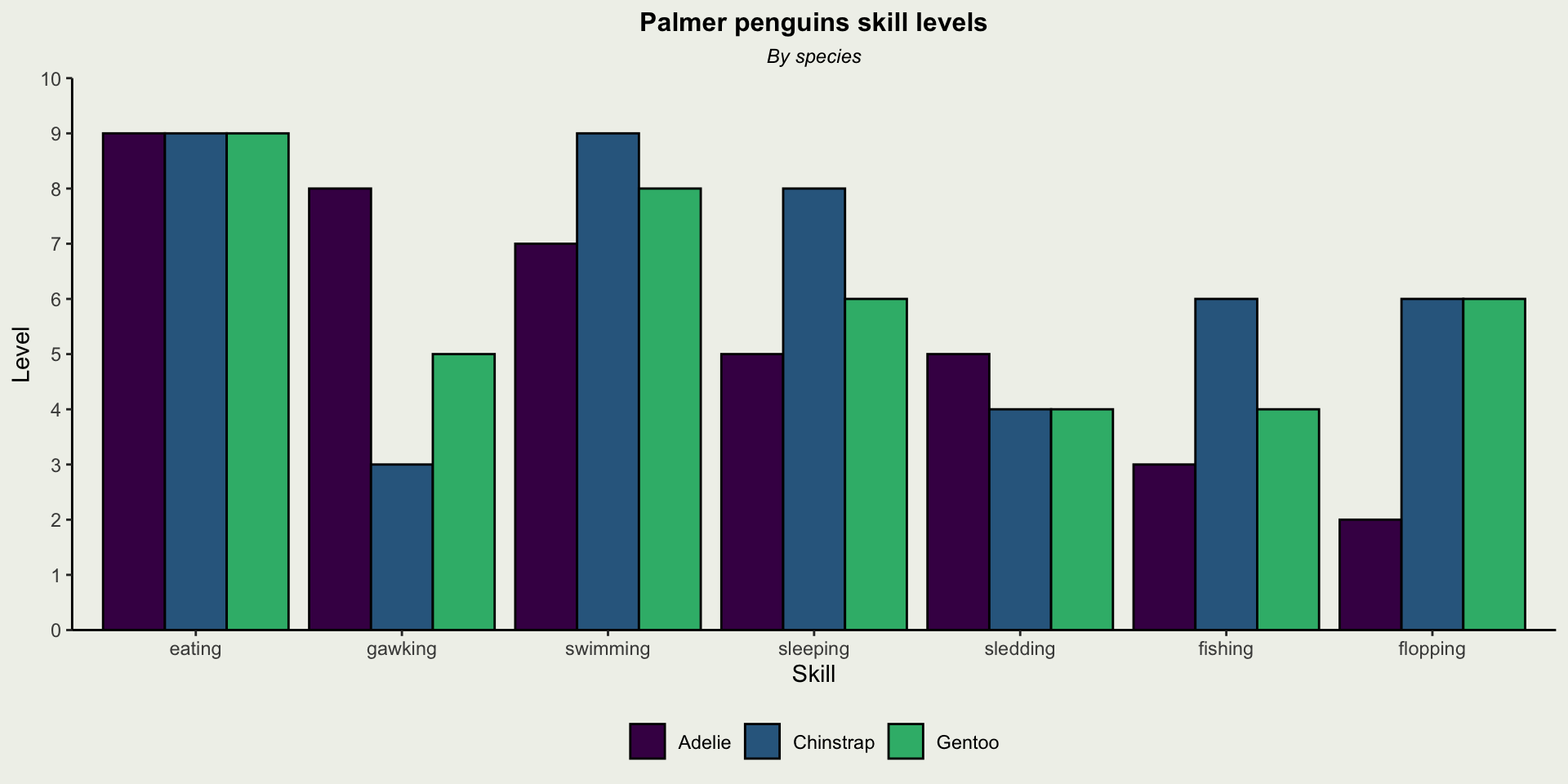
Spider/Radar Graphs (1/5)
Spider/Radar Graphs (2/5)
Spider/Radar Graphs (3/5)
Spider/Radar Graphs (4/5)
Spider/Radar Graphs (5/5)
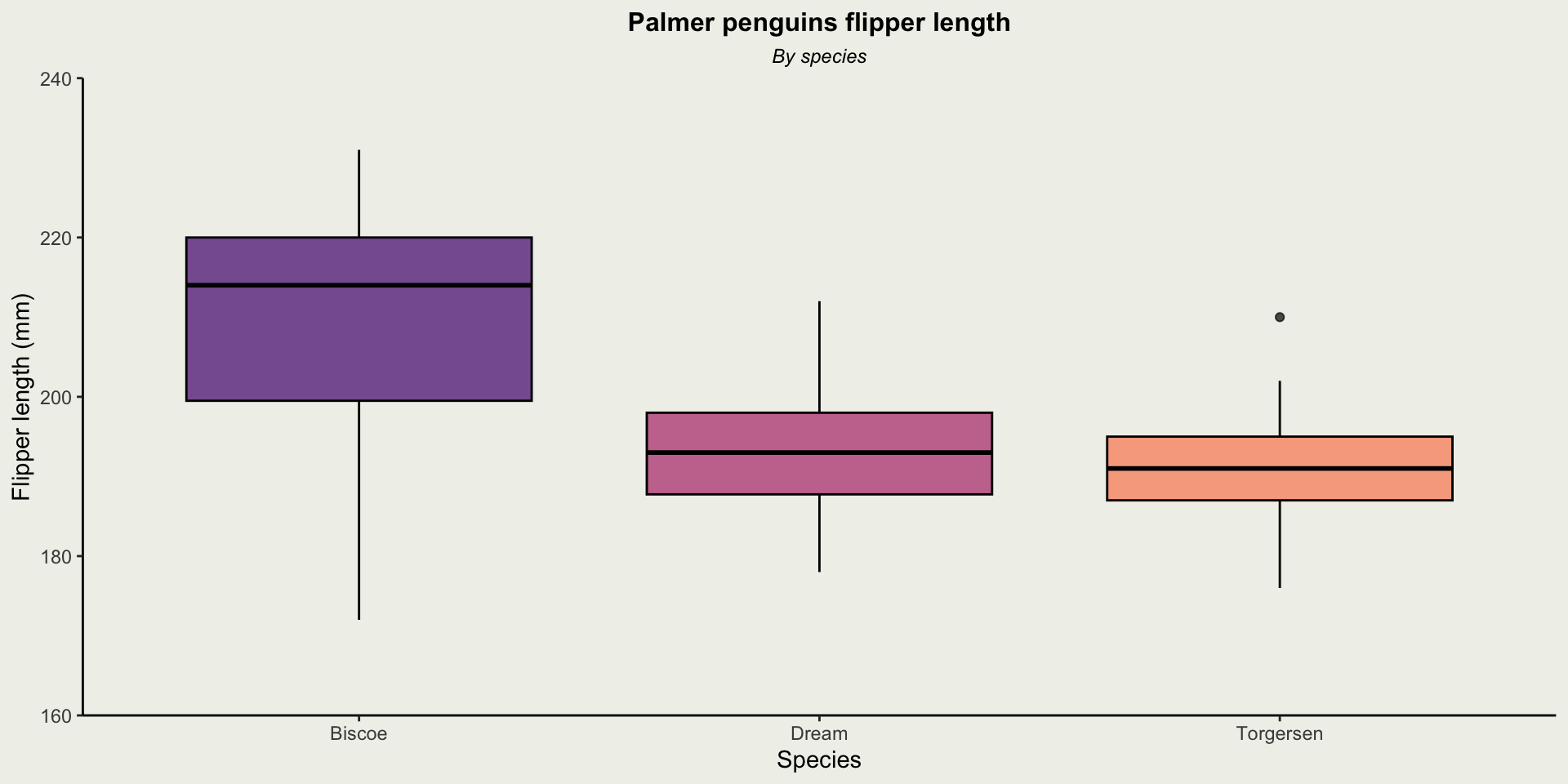
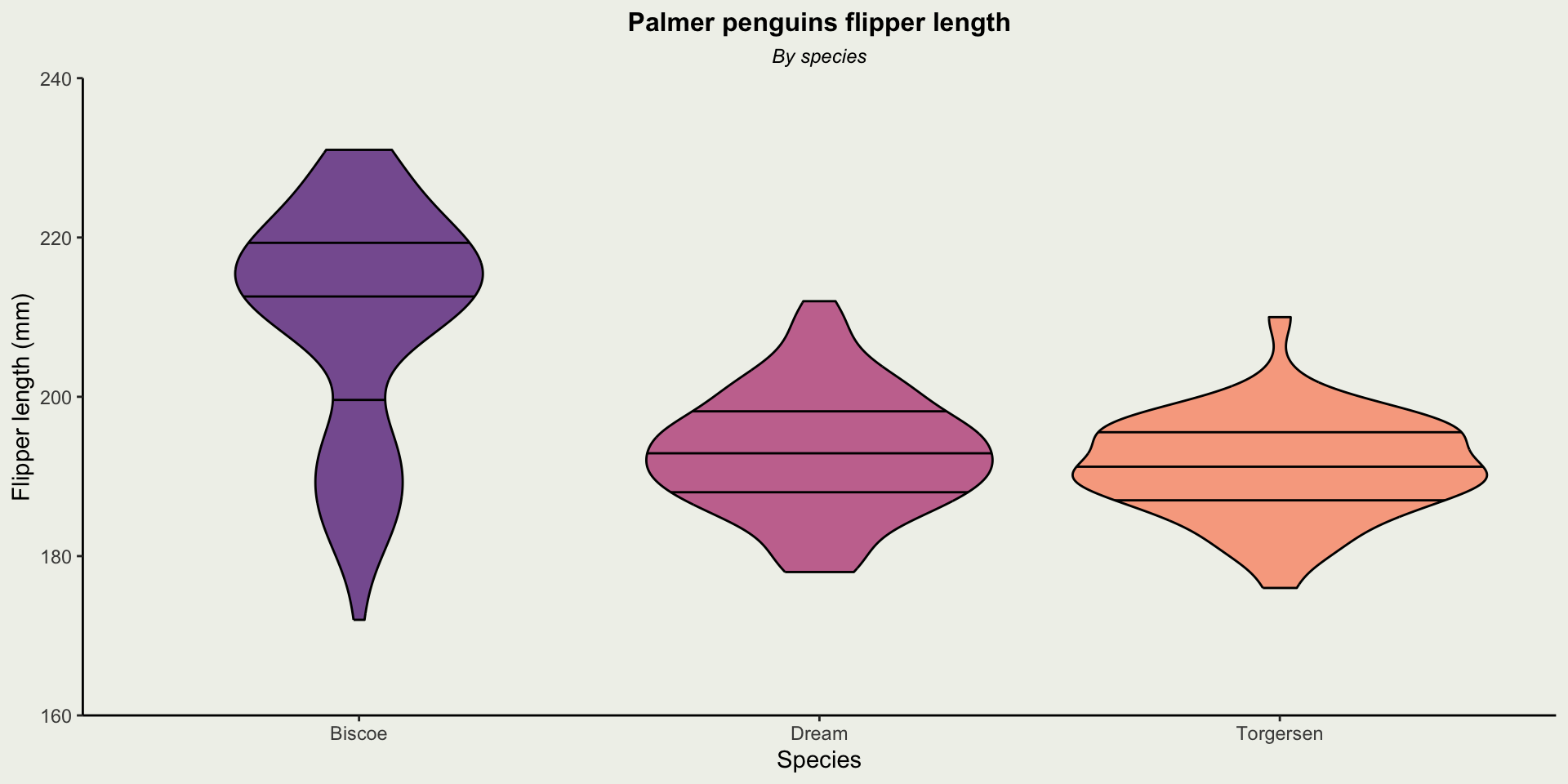
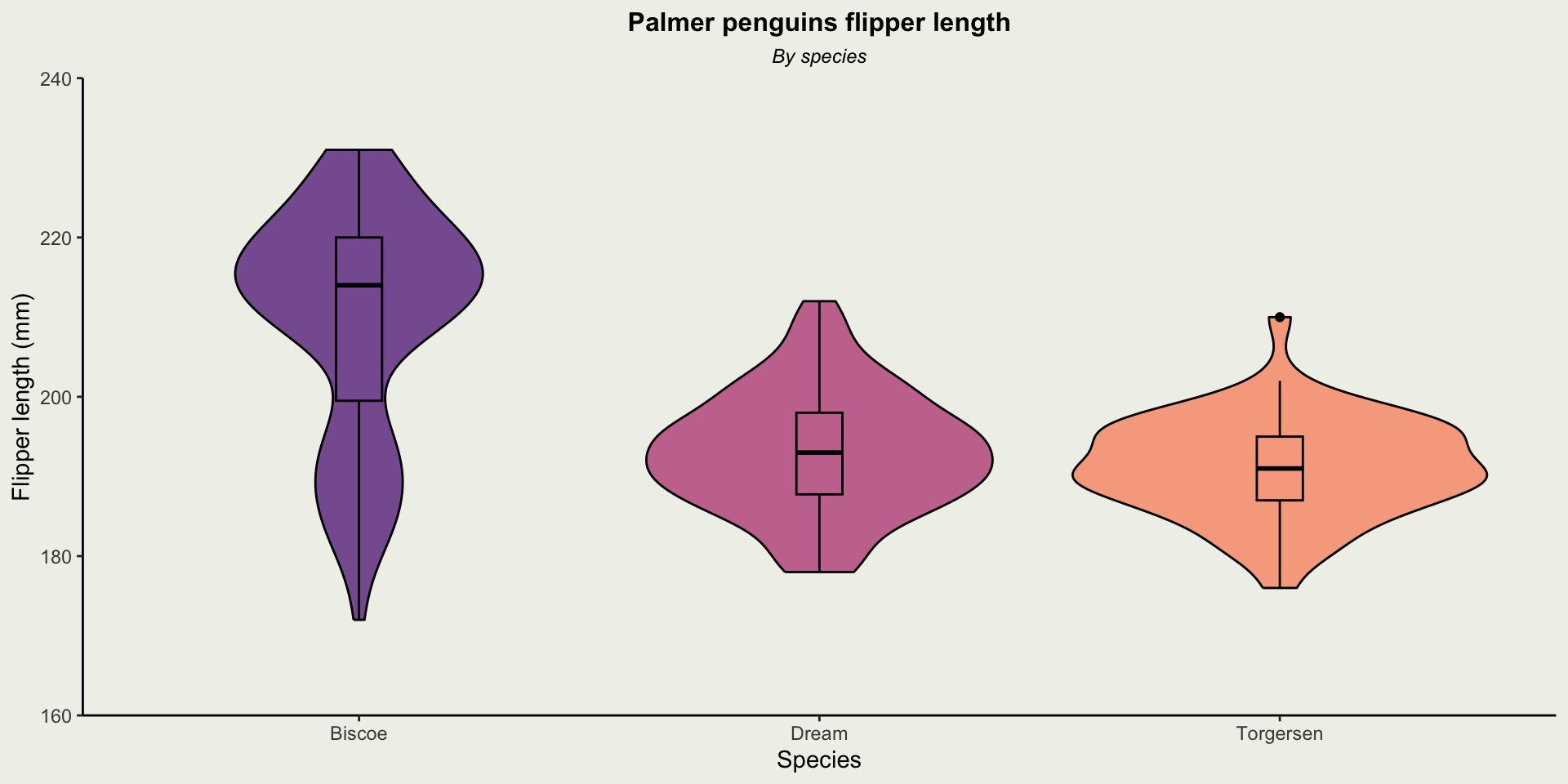
Boxplots (1/3)
Boxplots (2/3)
Boxplots (3/3)
What plot should I pick?: https://www.data-to-viz.com/
More on caveats: https://www.data-to-viz.com/caveats.html
Doing it in R: https://r-graph-gallery.com/
Doing it in Python: https://python-graph-gallery.com/
Doing it in JavaScript: https://www.react-graph-gallery.com/