On observational causality

Extending the evidence through target trial emulation

Dr. Roemer J. Janse

UMC Utrecht

Prelude

Causal Questions

To optimally understand haemodiafiltration (HDF), we want to ask causal questions:

Does an intervention on the exposure lead to/cause/change the outcome?


Important

We assume that any change in the outcome is only due to our intervention

The Holy Grail of Causality

The Holy Grail: Randomisation

Ideally, we answer our causal questions using randomised controlled trials (RCTs)

  • We randomise to whom (and to whom not) we give the intervention
  • Because we do this randomly, we expect both groups to be practically the same 1

The Holy Grail: Alignment

Additionally, RCTs force us to,

  1. Include a participant when they are eligible
  2. Give our intervention at inclusion
  3. Start follow-up when we give our intervention

Note

This may seem straightforward, but that is only because an RCT forces us to align these moments.

The Expensive Holy Grail

Limitation 1: Trials are expensive
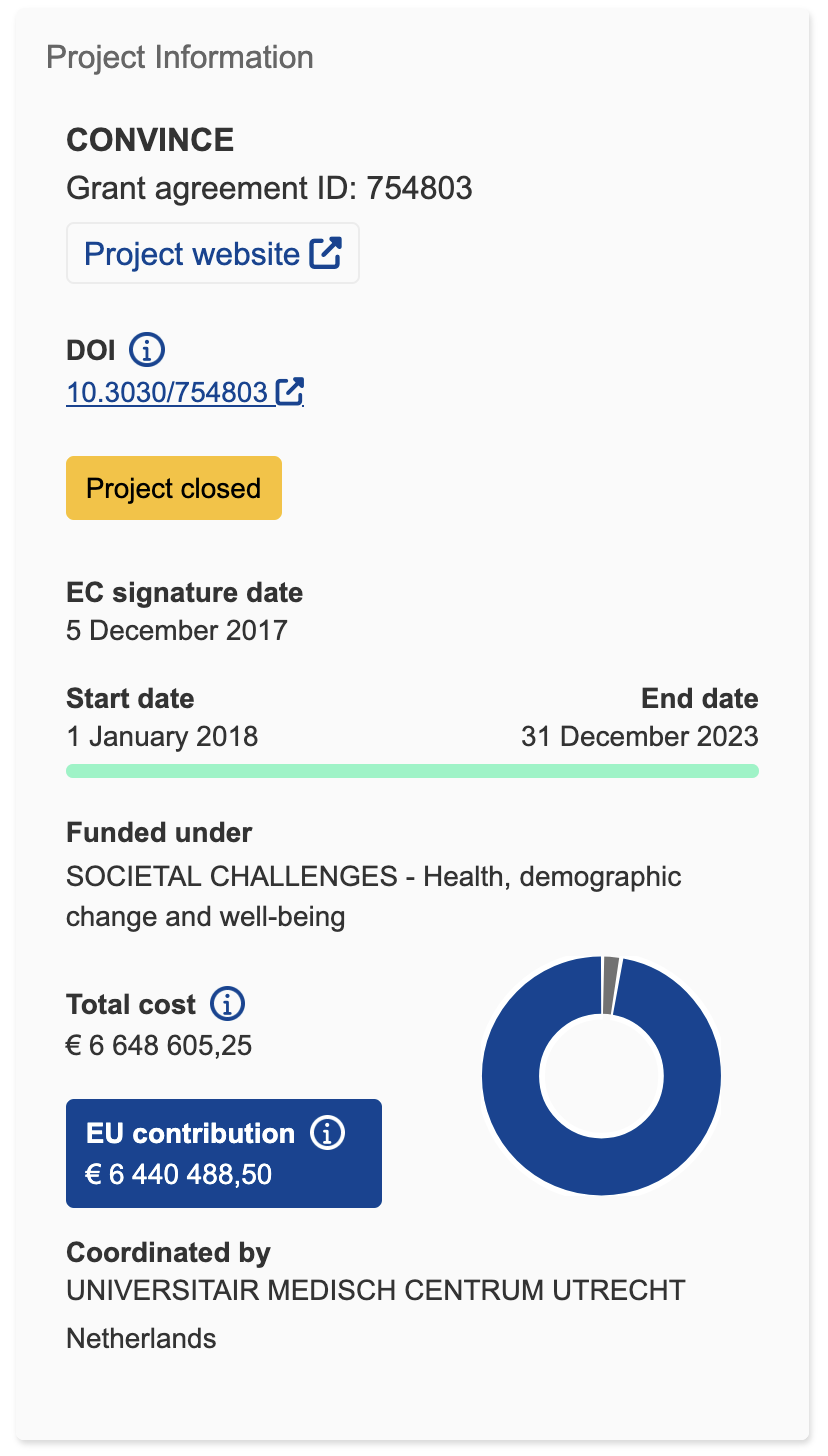
  • CONVINCE cost ~6.5 million EUR2017
    (~10 million EUR2026 or ~11.5 million USD2026)
  • Trials are as cost-efficient as possible
  • This leads to a highly selected study population
  • Thus, results are valid but difficult to generalise

The Highly Specific Holy Grail

Limitation 2: Trials only answer a few causal questions

For CONVINCE: Effect of high-dose HDF as compared to conventional guideline based HD (i.e. current standard of care) in terms of morbidity, mortality and HRQoL.


But what about:

  • Different strategies of initiating HDF?
  • HDF compared to other dialysis modalities?
  • The underlying mechanisms?
  • etc.

Observational Enrichment

Observational data

Limitations:

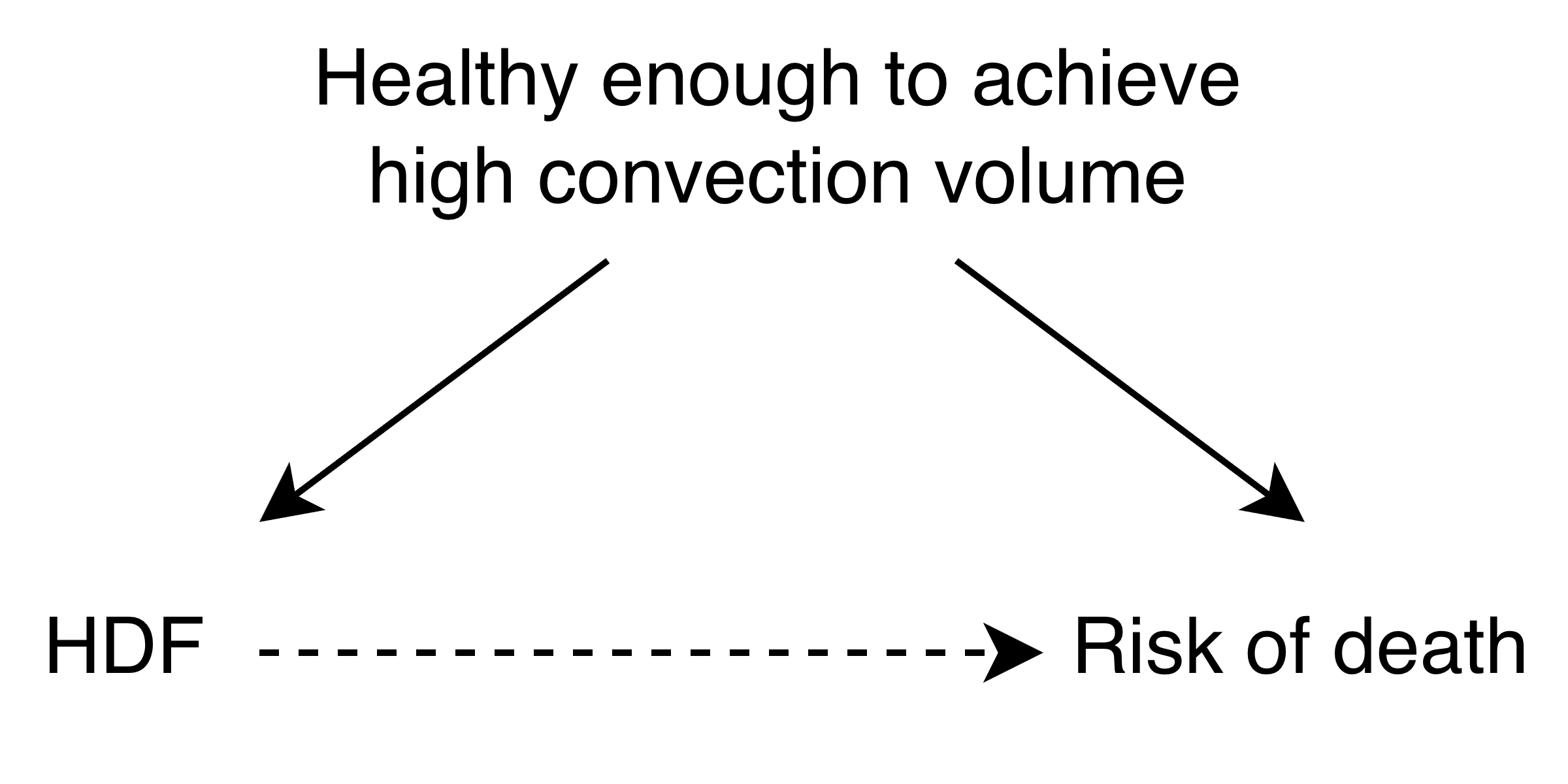
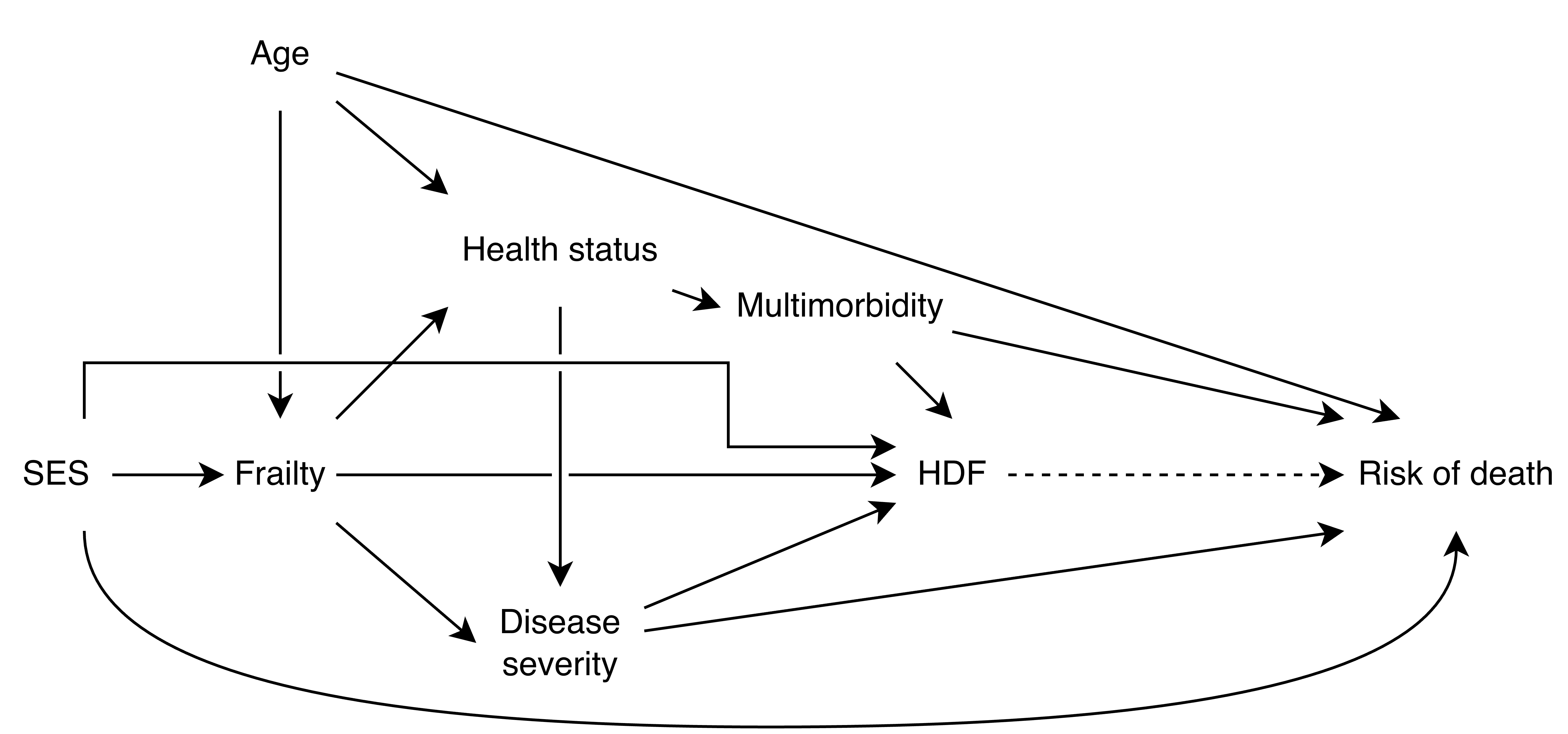
  • For most interventions, there is confounding
  • There is almost never a single clear baseline (no easy alignment)

Strengths:

  • It is easier(/cheaper) to study a large population
  • Data often represents routine clinical practice
  • Results are better generalisable

Confounding

Confounding

Alignment

Three key pillars:

  • Eligibility
  • Assignment of intervention (strategy)
  • Start of follow-up

Misalignment

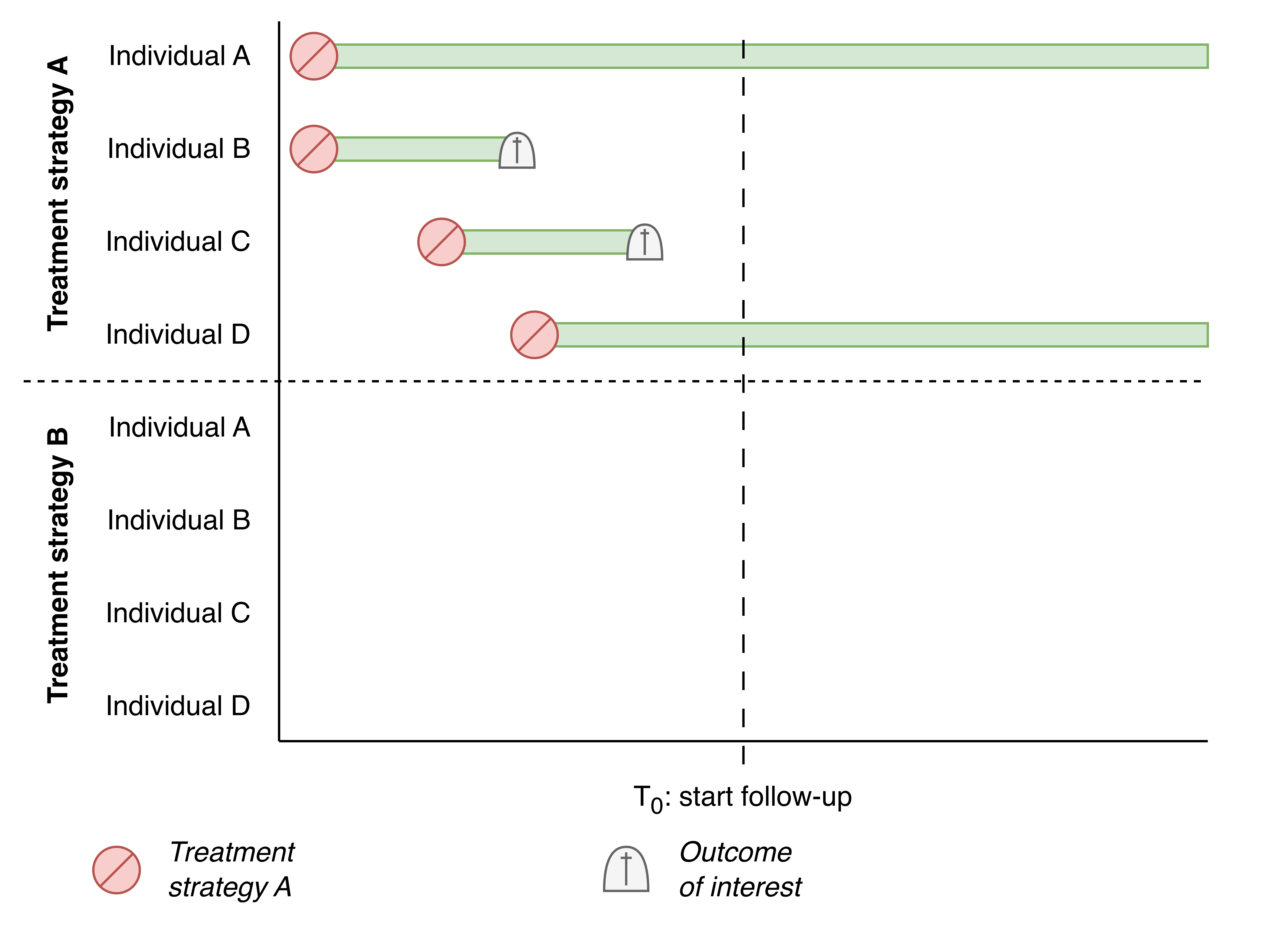
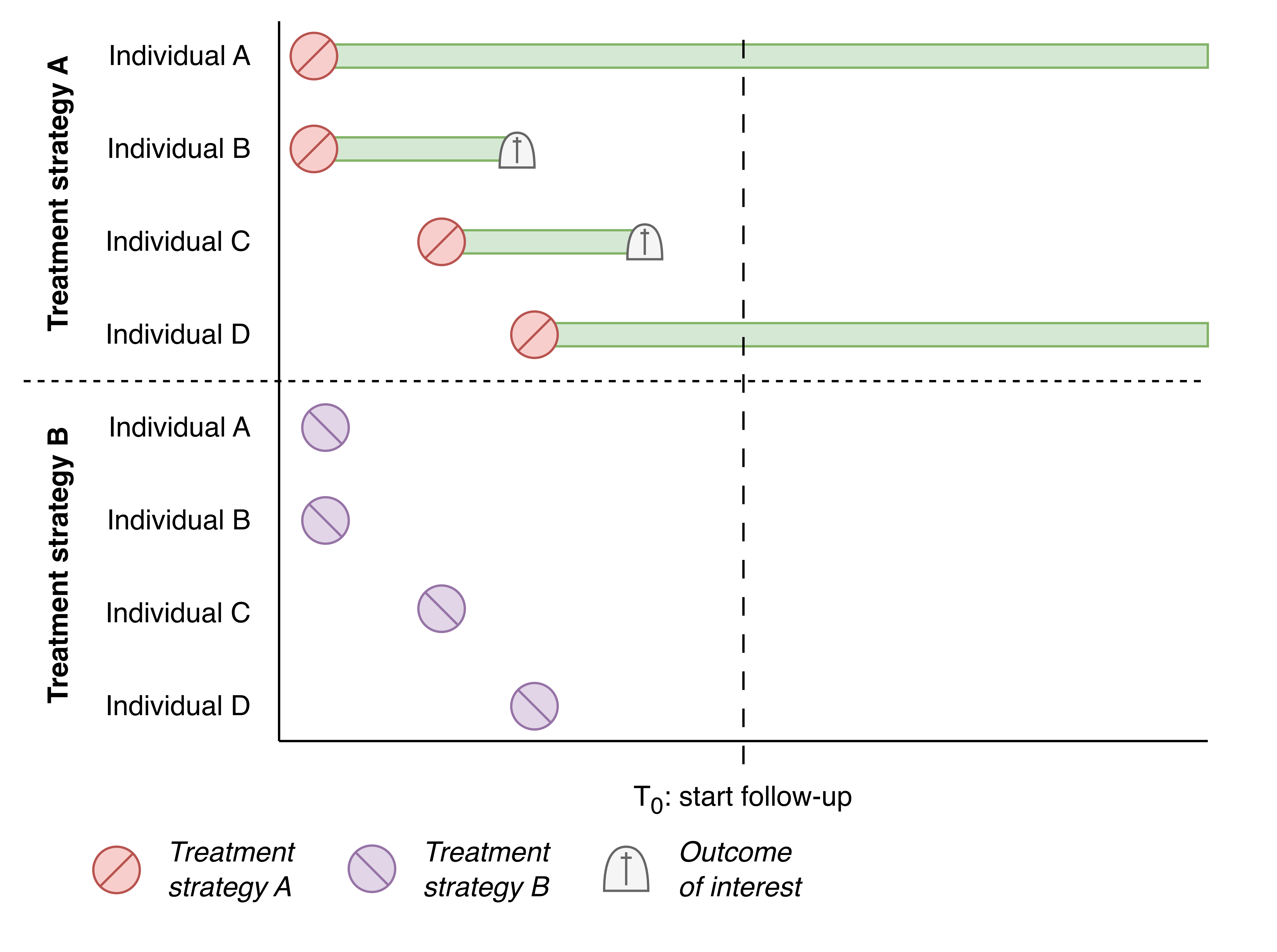
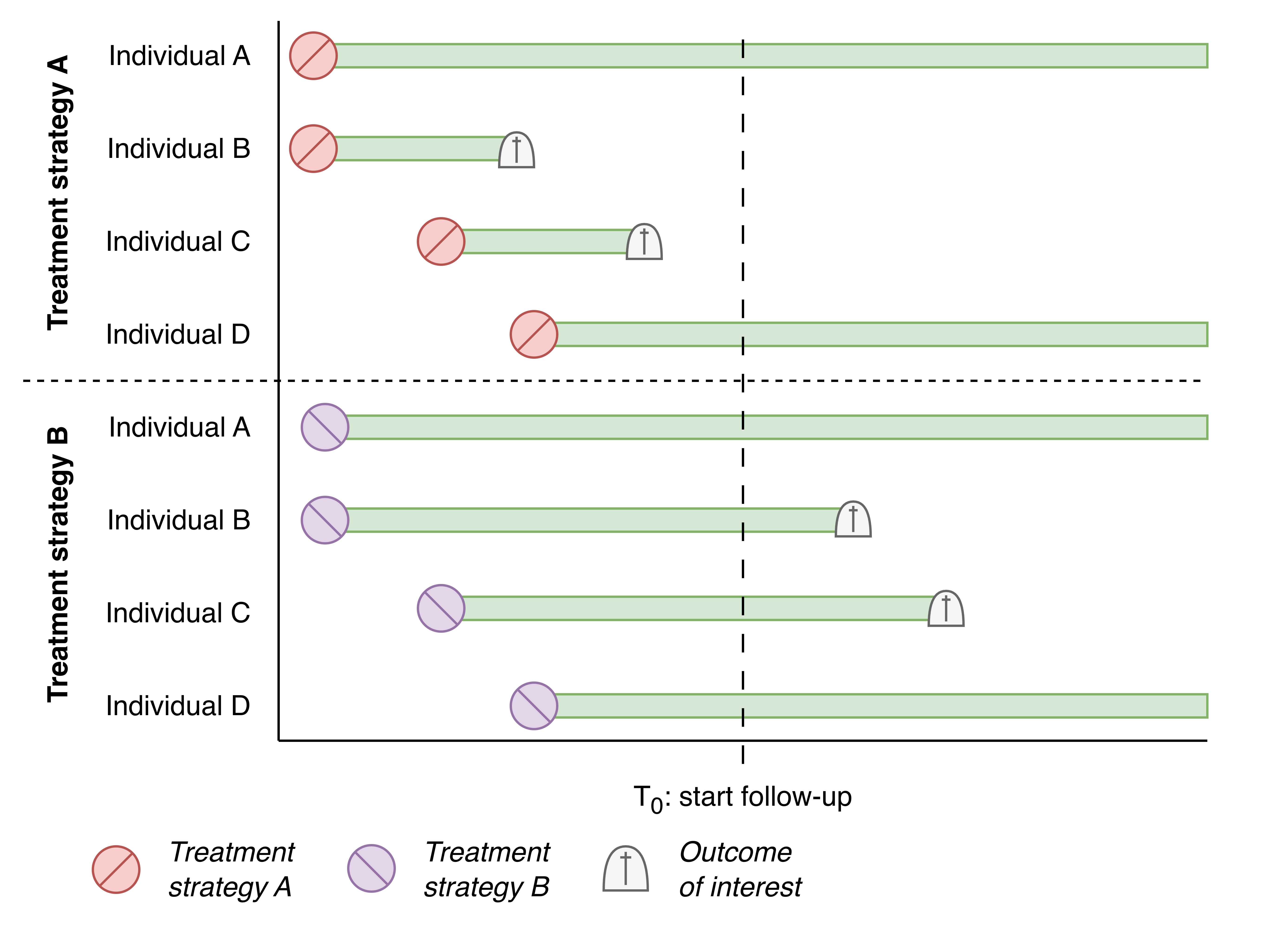
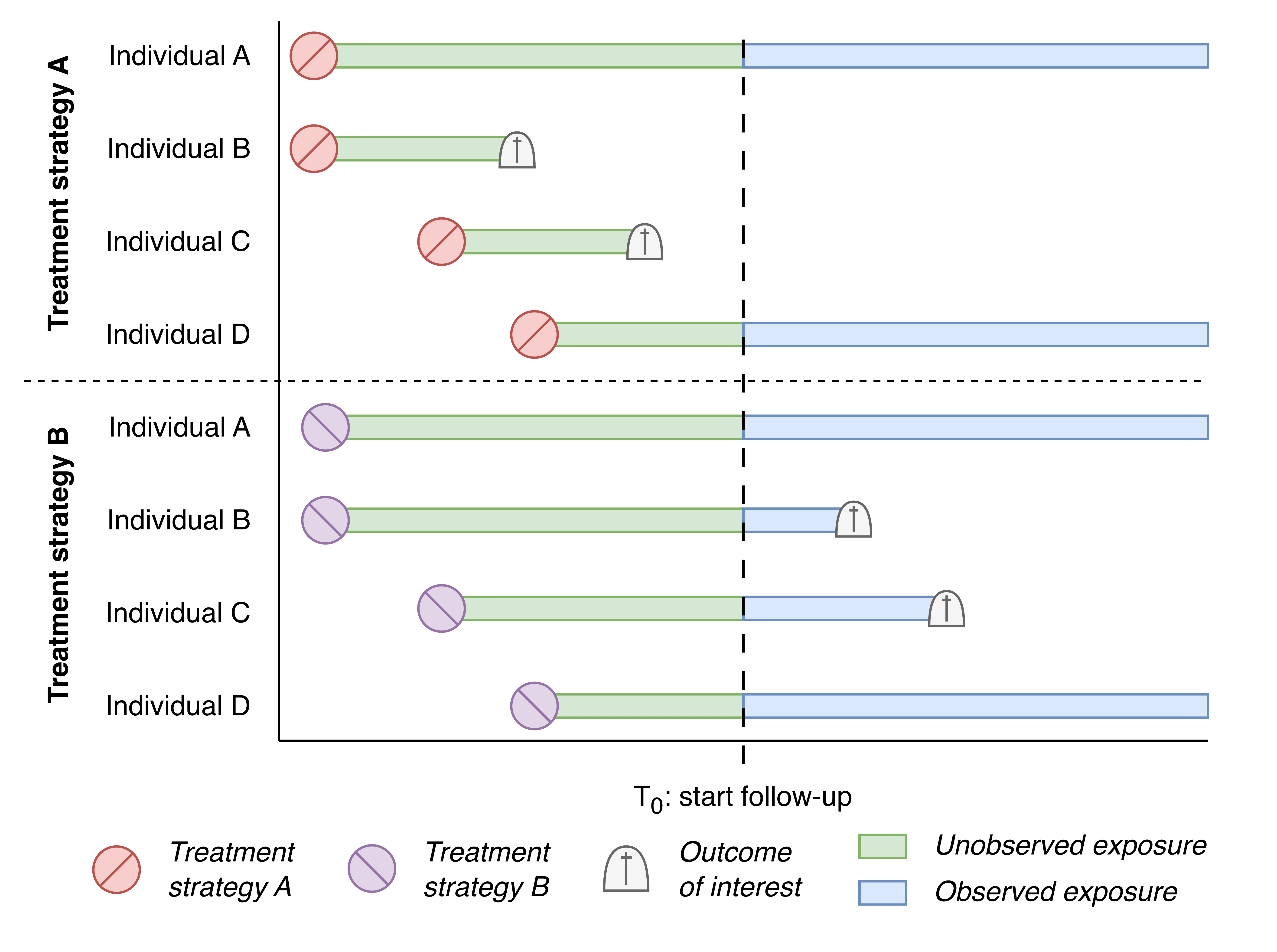
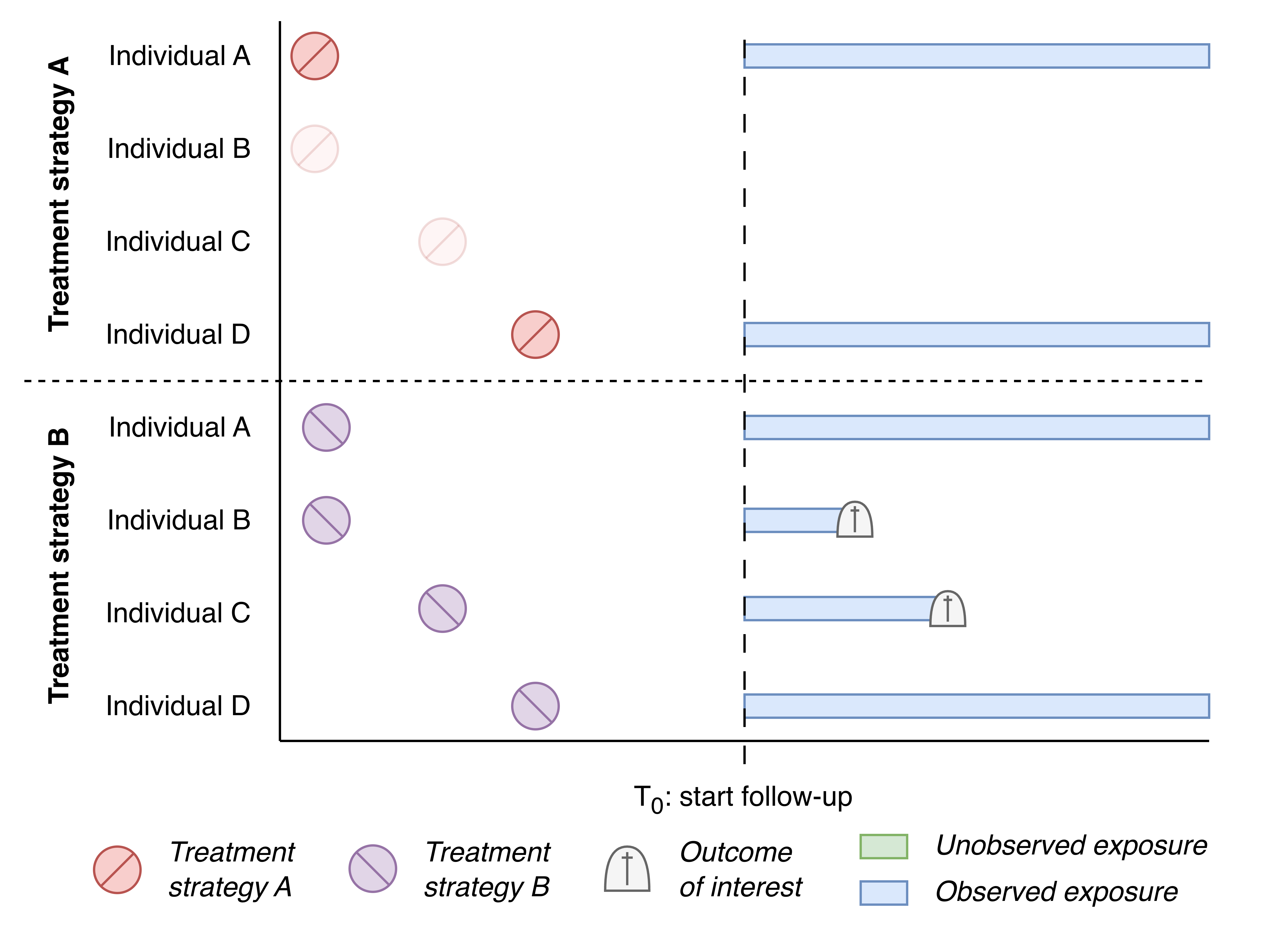
What if follow-up starts after assignment of the intervention (strategy)?
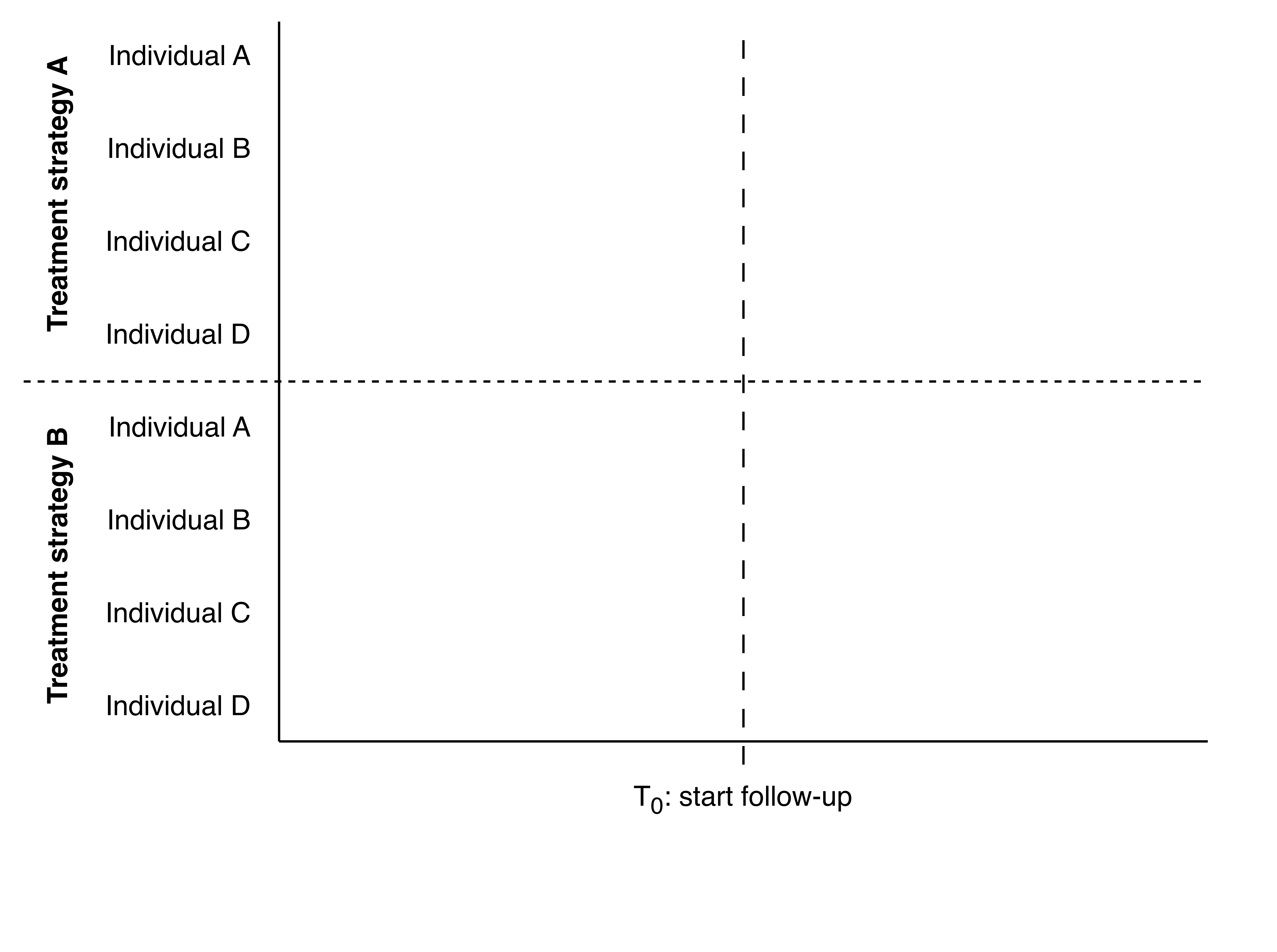
Misalignment

What if follow-up starts after assignment of the intervention (strategy)?
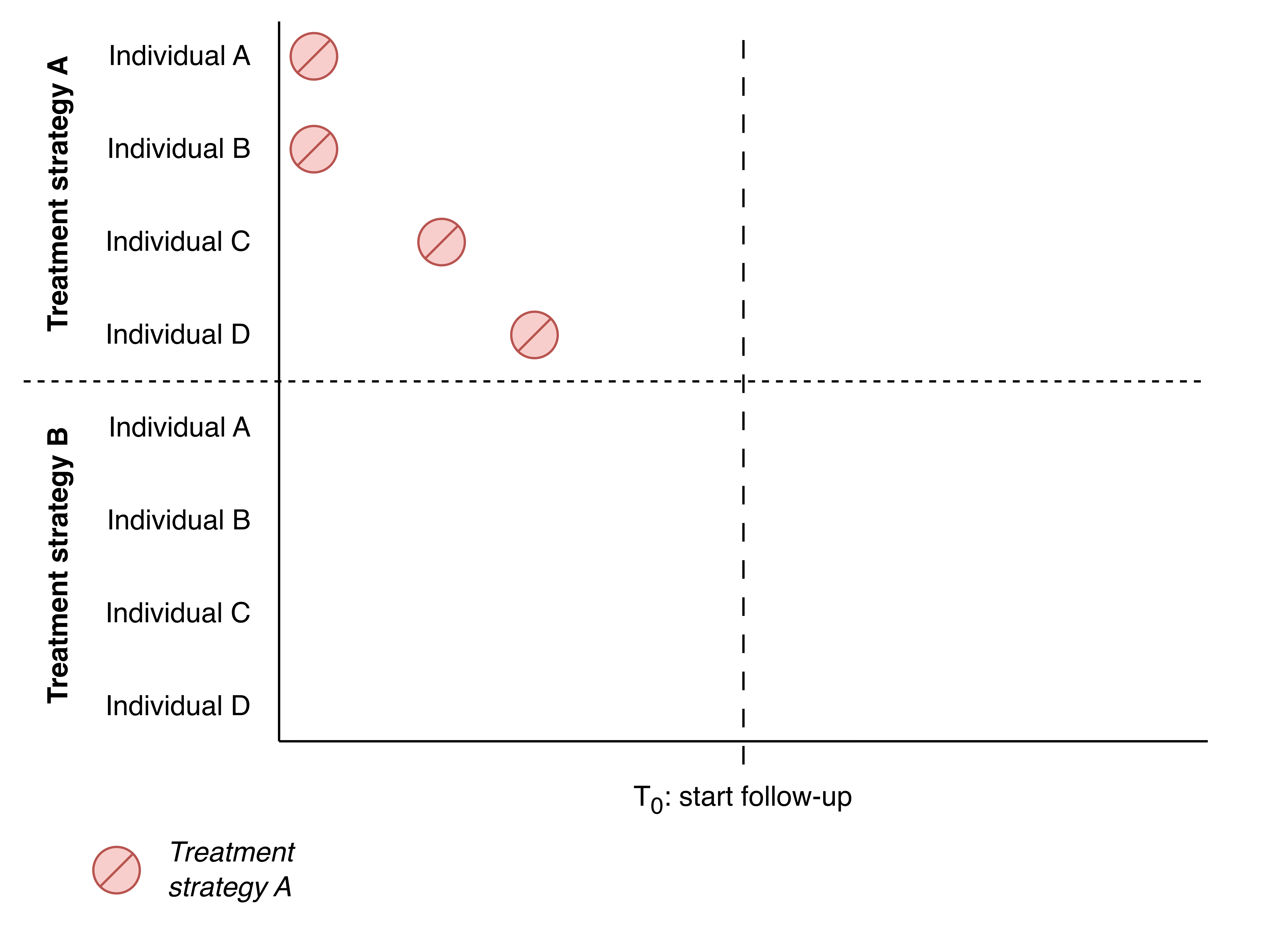
Misalignment

What if follow-up starts after assignment of the intervention (strategy)?
Misalignment

What if follow-up starts after assignment of the intervention (strategy)?
Misalignment

What if follow-up starts after assignment of the intervention (strategy)?
Misalignment

What if follow-up starts after assignment of the intervention (strategy)?
Misalignment

What if follow-up starts after assignment of the intervention (strategy)?
Misalignment

If follow-up starts after intervention assignment, you get:

Prevalent user bias

  • A protective intervention helps individuals make it until inclusion
  • A non-protective/harmful intervention loses those individuals
  • This is called ‘depletion of susceptibles’
  • As a result, the effect is underestimated

Misalignment

What if follow-up starts before assignment of the intervention (strategy)?

Misalignment

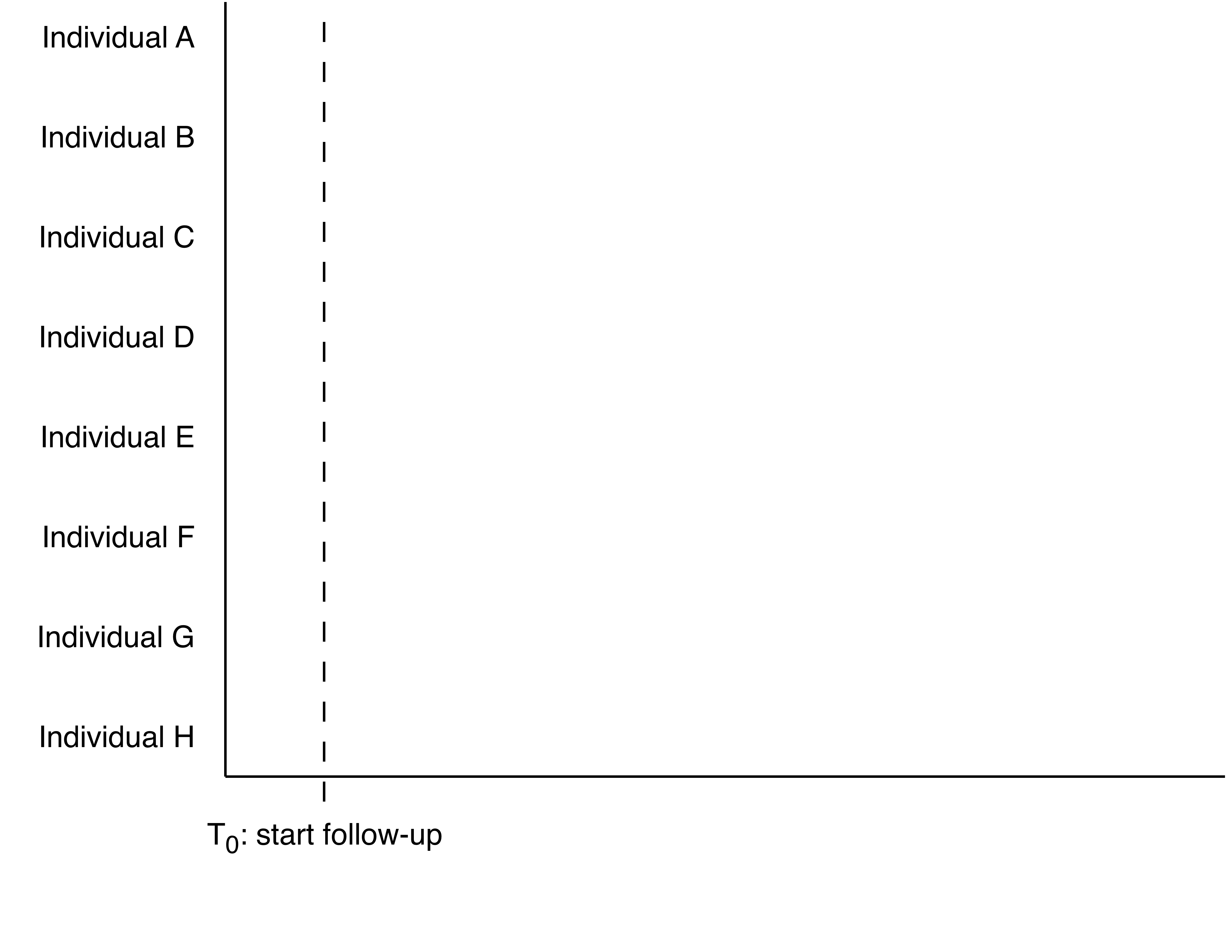
What if follow-up starts before assignment of the intervention (strategy)?
Misalignment

What if follow-up starts before assignment of the intervention (strategy)?
Misalignment

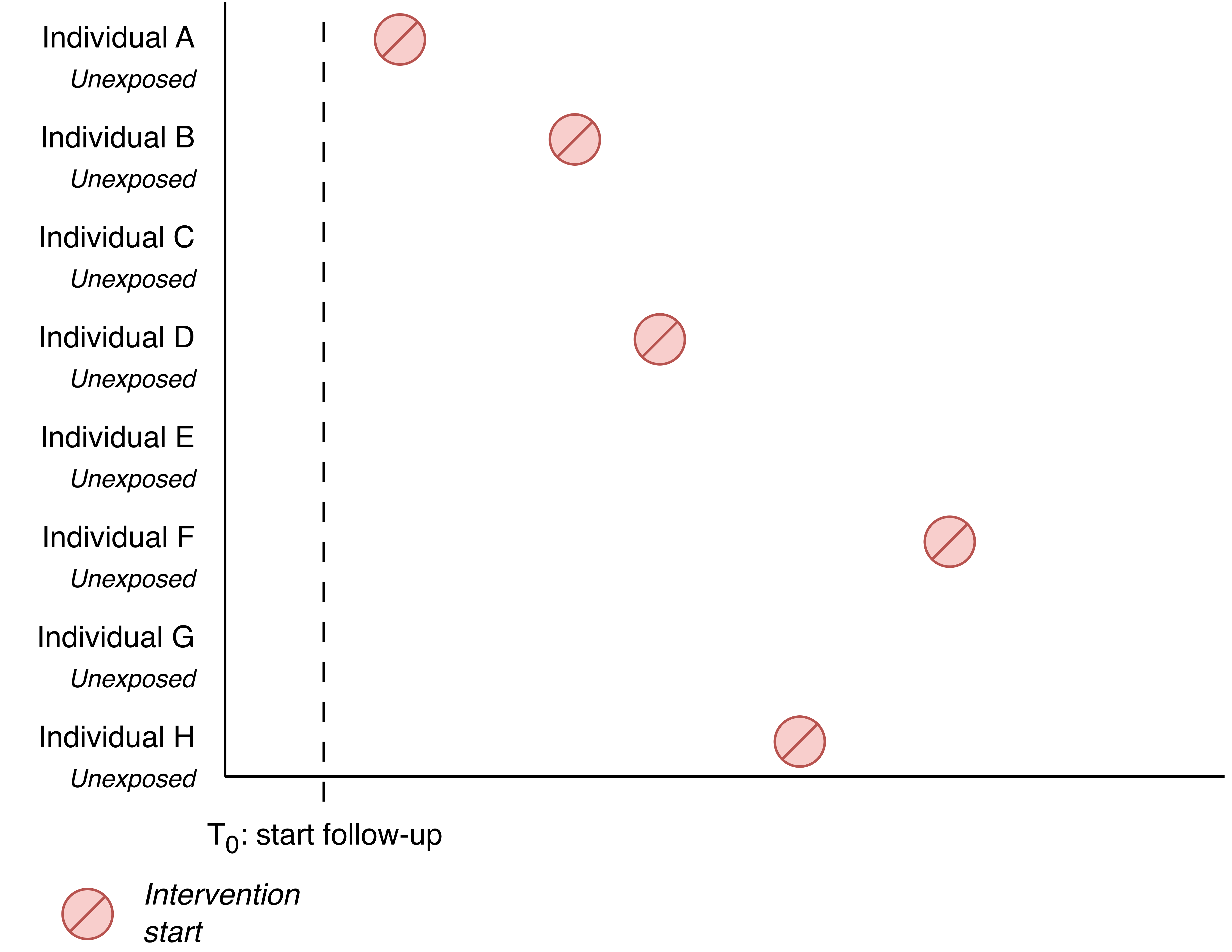
What if follow-up starts before assignment of the intervention (strategy)?
Misalignment

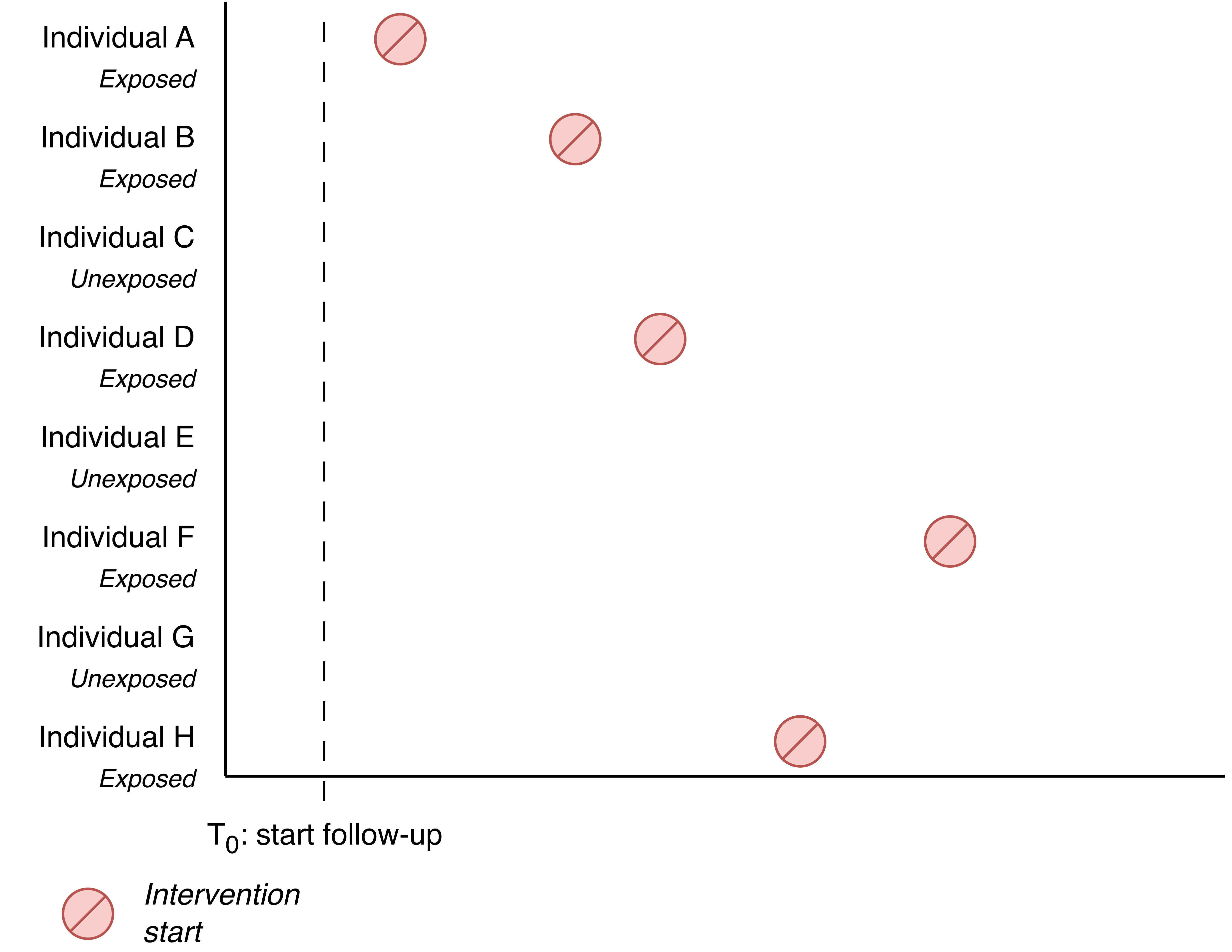
What if follow-up starts before assignment of the intervention (strategy)?
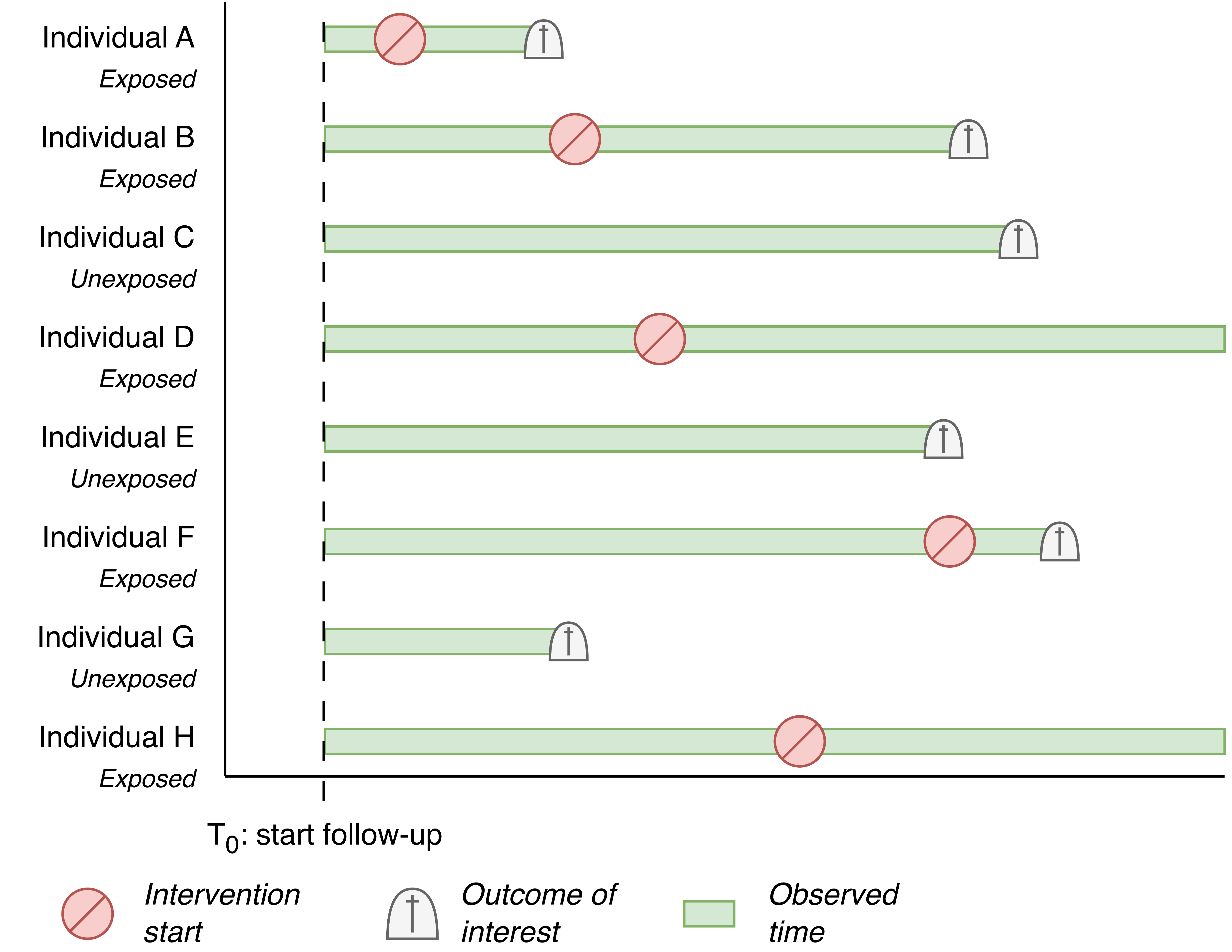
Misalignment

What if follow-up starts before assignment of the intervention (strategy)?
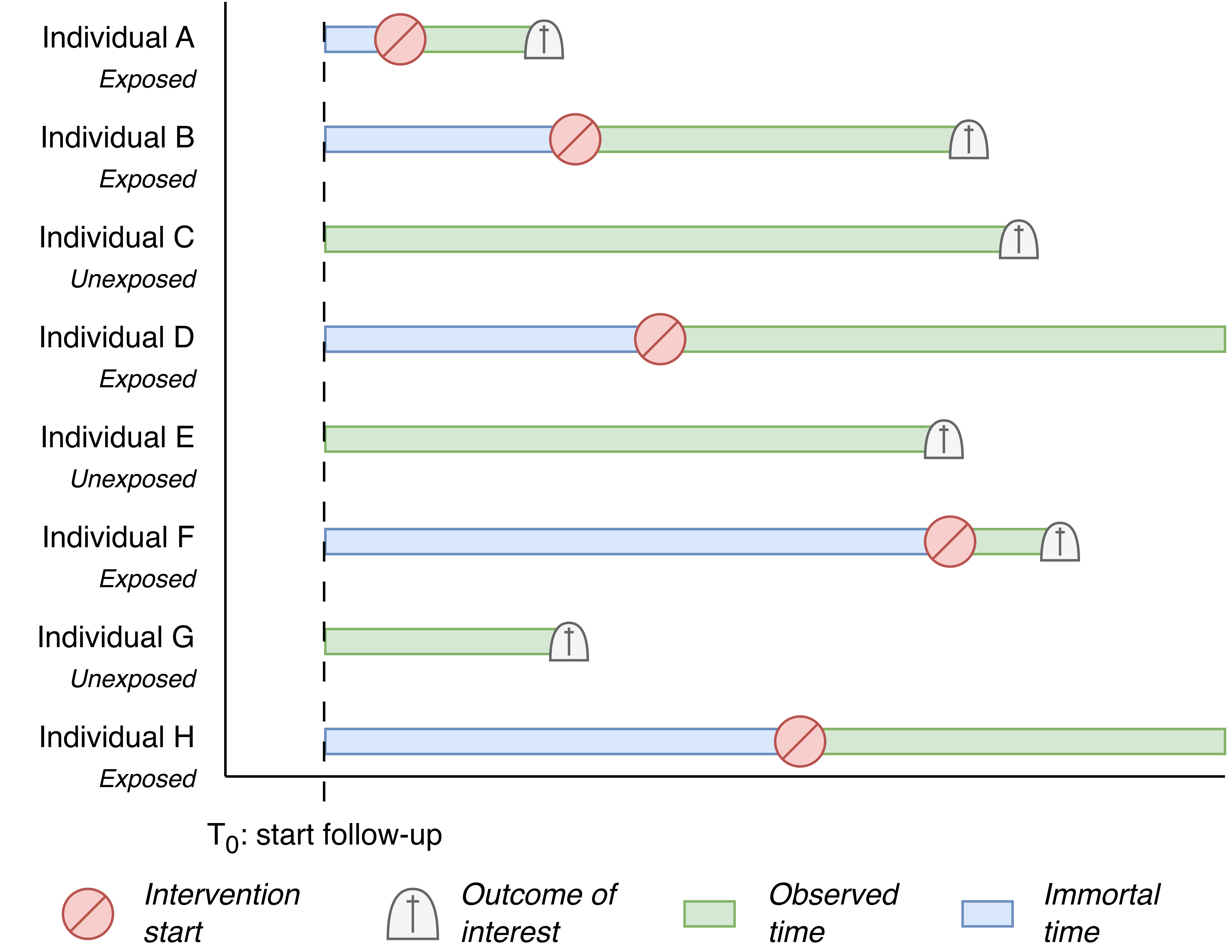
Misalignment

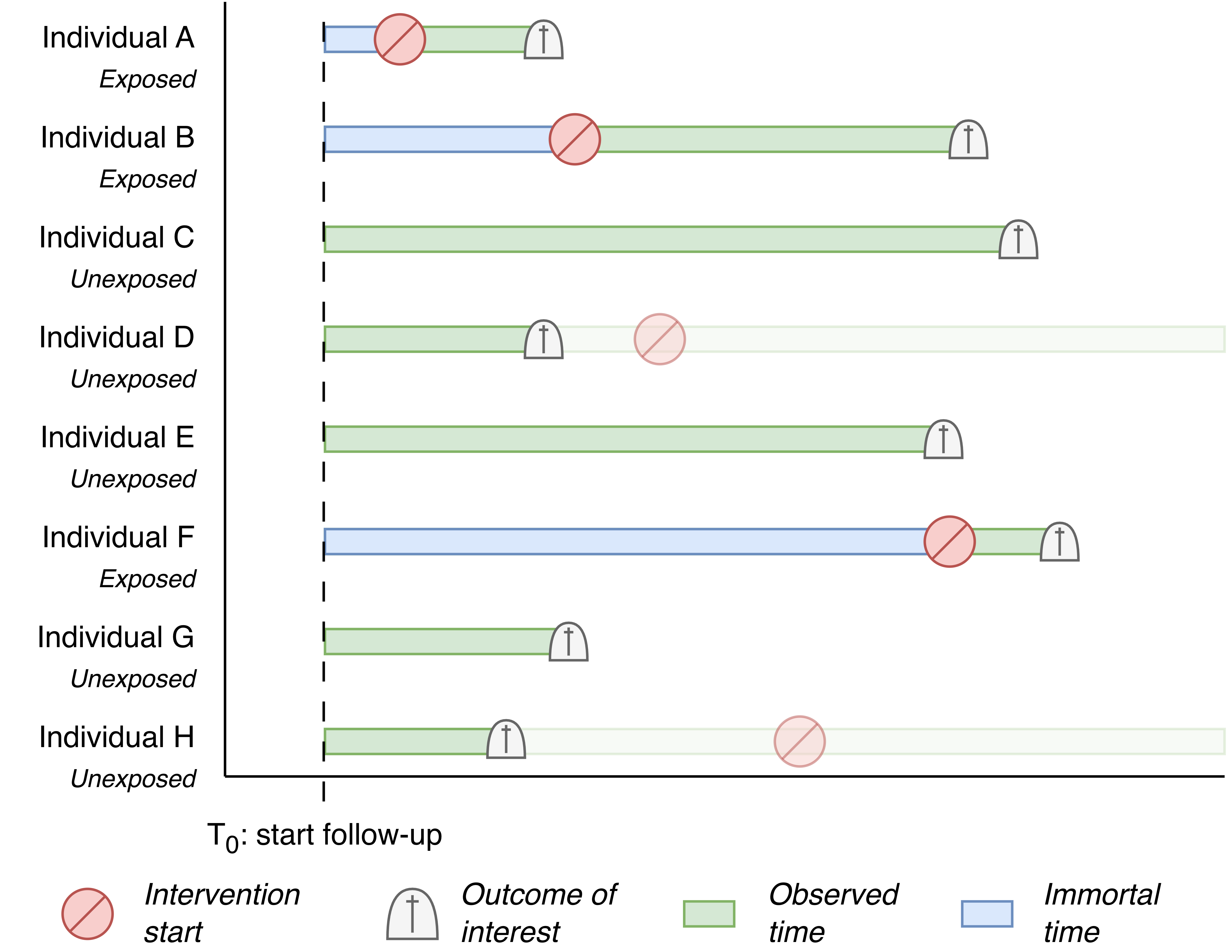
If follow-up starts before intervention assignment, you get:

Immortal time bias

  • This occurs when you use future information
  • You are immortal until you receive the intervention if you are part of the intervention arm (i.e. artificial survival advantage)
  • Pre-intervention deaths are added to the control arm
  • As a result, the effect is overestimated

Getting it Right

Target Trials

  • To get it right, we think about trials
  • We do not need to (be able to) perform this trial
  • Instead, we borrow it’s design strengths
  • These strengths are incorporated in our observational study

The Target Trial Emulation Framework

This approach is formalised in the target trial emulation (TTE) framework

  • The TTE framework helps us design our target trial
  • The TTE framework helps us emulate that trial using observational data
  • The TTE framework forces to be explicit about these steps

Target Trial Emulation

Target Trial Item Elaboration

Target Trial Emulation

Target Trial Item Elaboration
Eligibility criteria Who gets to participate?

Target Trial Emulation

Target Trial Item Elaboration
Eligibility criteria Who gets to participate?
Treatment strategies What interventions are you studying?

Target Trial Emulation

Target Trial Item Elaboration
Eligibility criteria Who gets to participate?
Treatment strategies What interventions are you studying?
Treatment assignment How do you decide who is assigned to which intervention?

Target Trial Emulation

Target Trial Item Elaboration
Eligibility criteria Who gets to participate?
Treatment strategies What interventions are you studying?
Treatment assignment How do you decide who is assigned to which intervention?
Outcome What outcomes are you studying?

Target Trial Emulation

Target Trial Item Elaboration
Eligibility criteria Who gets to participate?
Treatment strategies What interventions are you studying?
Treatment assignment How do you decide who is assigned to which intervention?
Outcome What outcomes are you studying?
Causal estimand What, for who, with which measure, exactly, are you estimating?

Target Trial Emulation

Target Trial Item Elaboration
Eligibility criteria Who gets to participate?
Treatment strategies What interventions are you studying?
Treatment assignment How do you decide who is assigned to which intervention?
Outcome What outcomes are you studying?
Causal estimand What, for who, with which measure, exactly, are you estimating?
Start and end of follow-up When do you start and when do you stop counting outcomes?

Target Trial Emulation

Target Trial Item Elaboration
Eligibility criteria Who gets to participate?
Treatment strategies What interventions are you studying?
Treatment assignment How do you decide who is assigned to which intervention?
Outcome What outcomes are you studying?
Causal estimand What, for who, with which measure, exactly, are you estimating?
Start and end of follow-up When do you start and when do you stop counting outcomes?
Statistical analysis What methodology is required for the first six items?

Getting it Right: Confounding

  • The item Treatment assignment helps us think about confounding
  • The item Statistical analysis allows us to specify how we deal with confounding
  • Methods to deal with confounding are not specific to target trial emulation

Getting it Right: Confounding

Getting it Right: (Mis)alignment

  • The item Start and end of follow-up help us think about (mis)alignment of eligibility, intervention assignment, and start of follow-up
  • This is captured in the study design we use, the components of which appear throughout the target trial emulation table
  • Designs to ensure alignment are not specific to target trial emulation

Getting it Right: (Mis)alignment

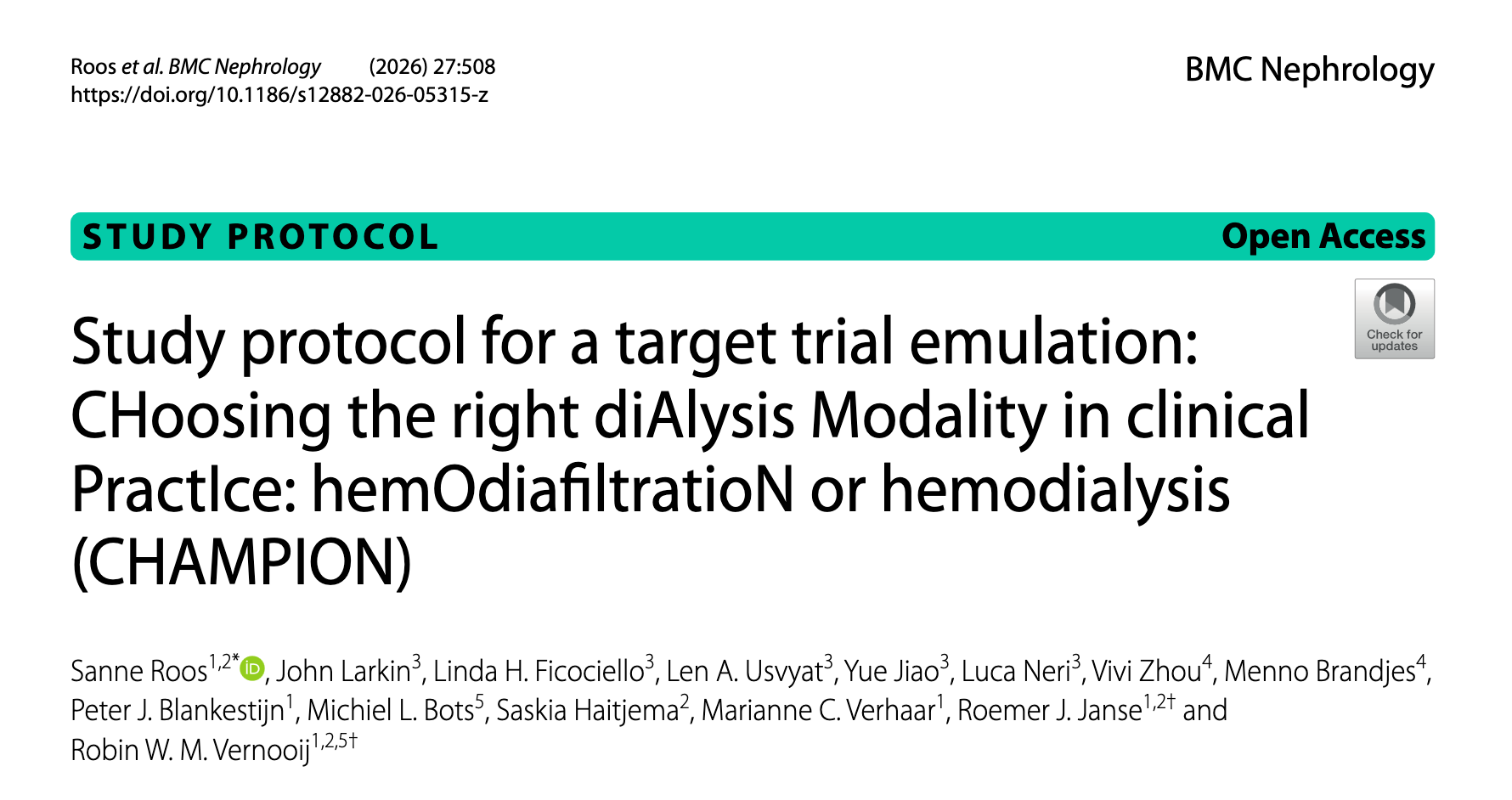
A Worked Out Example

10.1186/s12882-026-05315-z

Final Thoughts

Target trial emulation is not a method, but a framework

As a framework, target trial emulation primarily helps you structure your thoughts

A study using the target trial emulation framework can be supercomplex, but als supersimple

Simple methods give copmlex answers; complex methods give simple answers

Thank you!